

If you've received a job offer recently, you might be wondering how to respond in a professional manner, especially if you want a higher salary without sounding pushy or ungrateful. That's where crafting the right salary negotiation email comes in. Salary negotiation is a crucial part of the hiring process, and learning how to negotiate confidently can dramatically improve your earning potential across all future job opportunities.
In this guide we'll break down the core principles behind an effective salary negotiation conversation, discuss the common mistakes candidates make, walk through the stages of the interview process where negotiation matters, and give you practical salary negotiation email examples you can use immediately. We'll also share a complete salary negotiation email template bundle to help you get the salary you deserve.
Whether you're evaluating an initial offer, reviewing the offer, or preparing to negotiate salary after market research, this guide will help you feel comfortable accepting a role only when the entire compensation package matches your desired salary and career level. This includes base salary, bonus, perks, and additional benefits.
1. Why Salary Negotiation Matters
Too many candidates skip negotiation out of fear of rejection, low confidence, or lack of clarity around their salary expectations. But here's the truth:
Companies expect you to negotiate a salary, and not doing so can cost you tens of thousands over your career.
We teach one powerful idea we teach here: the person who names a number first loses. That's why deflection, research, and timing are essential in any salary negotiation conversation, whether it happens on a call or via email.
Understanding starting salaries is essential when evaluating any new role, but pairing that knowledge with effective salary negotiation tips can make an even bigger difference in your final compensation. By researching market rates, knowing your value, and approaching the conversation with confidence, you can secure a stronger offer and set yourself up for long-term career growth.
And remember, you're not only negotiating your salary offer. You should also evaluate the full benefits package, including PTO, stock options, health insurance, flexibility arrangements, and other benefits like remote work or tuition reimbursements. These "extras" may seem small, but they often add up to strong total rewards and reflect your market worth.
2. The Strategy Behind Every Salary Negotiation Email
A well-crafted negotiation message should always:
- Express gratitude
- Align with the company's goals
- Show you're excited about the opportunity
- Demonstrate confidence in your skill set and market value
- Request a salary closer to the market average for similar roles in your geographical location
- Mention your experience, education level, and accomplishments
- Never rush, always take your time to review
- Ask thoughtful, clarifying questions (because asking questions signals confidence and competence)
- Maintain a friendly tone that HR teams and any hiring manager will appreciate
Remember that low offers aren't always intentional, sometimes it's bandwidth, budget cycles, or simply benchmarking issues. Addressing lowballing situations requires tact, clarity, and confidence.
3. Salary Research Before You Negotiate
Before sending any negotiation message, do deep market research. Understand the average salary range for:
- The job title
- The company
- Your education level and experience
- The new city (if relocation is involved)
- The industry demand and turnover
- The manager position or level you're entering
This ensures you're requesting a remuneration package that matches your market value and makes it easier to justify a reasonable salary request.
When you state your requested salary, ensure the number is competitive and supported by data.
4. Practical Salary Negotiation Email Templates You Can Use

Below are rewritten and polished templates that follow negotiation best practices so you can confidently navigate every step of the negotiation process.
Template 1: Buy Time After Receiving an Initial Offer
(Great for reviewing the offer before you negotiate)
Subject: Re: [Position] Offer – [Your Name]
Hi [Hiring Manager],
Thank you so much for extending the offer for the [Position] role. I truly appreciate the time you and the team have invested, and I'm genuinely excited about the opportunity and the potential opportunity to join [Company].
I'd like to take your time to go through the details of the salary offer, benefits, and the overall compensation package. Would it be alright if I got back to you by [2–3 days out]?
Thanks again,
[Your Name]
Template 2: Counteroffer After Market Research
(Perfect after evaluating the salary range and market average)
Subject: Re: [Position] Offer Discussion
Hi [Hiring Manager],
Thank you again for the offer to join [Company] as [Position]. After reviewing everything and doing additional research on the salary range for similar roles in this geographical location, I'd love to discuss the base salary.
Given my experience with [specific skill/accomplishment], and the work expected at this career level, I was hoping we could adjust the salary closer to [your target number]. I'm confident we can align on a number that reflects both my market value and the impact I'll bring.
Do you have time to discuss this week, or should we set up a time that works best?
Best,
[Your Name]
Template 3: Deflecting the Salary Expectations Question
(Use this during early stages of the interview process)
Subject: Re: [Position] Next Steps
Hi [Recruiter/Hiring Manager],
Thank you for moving me forward in the interview process—I'm thrilled about this opportunity.
Regarding salary expectations, I prefer to learn more about the role, responsibilities, and total benefits like bonuses, PTO, and growth opportunities before discussing specific numbers. I'm confident that if we're a good fit, we'll negotiate a fair compensation package.
May I ask what the budgeted salary in the range is for this position?
Looking forward to continuing our conversation.
Best,
[Your Name]
Template 4: Negotiating Beyond Salary
(When the salary offer is fine, but you want better perks)
Subject: Re: [Position] Offer Details
Hi [Hiring Manager],
Thank you for the updated offer and for your flexibility on the salary offer. Before signing, I'd love to revisit a few elements of the overall benefits package:
- Start Date: Could we push the start date to [date] to wrap up my current position responsibilities?
- Vacation: I noticed the package includes [X] days. Would [X+5] be possible?
- Remote Work Perk: Is there flexibility for [1–2 days/week] remote work?
I'm very close to accepting and simply want to make sure the entire package aligns with the expectations for this role. I'm open to discussing these options and happy to discuss anytime that works for you.
Best,
[Your Name]
Template 5: Following Up When No One Responds
(When HR goes silent, very common!)
Subject: Following Up – [Position] Offer Discussion
Hi [Hiring Manager],
I wanted to follow up on my previous message about the [Position] job offer. I'm still very interested and would love to finalize the details of the salary negotiation conversation.
Is there a good time this week for a quick call? Please let me know what works for you.
Thanks,
[Your Name]
Template 6: Using Another Offer as Leverage (Carefully!)
Subject: Re: [Position] Offer – Quick Update
Hi [Hiring Manager],
I wanted to provide a quick update. I've received a job offer with a higher salary, but [Company] remains my top choice because of the team, mission, and growth opportunities.
Is there flexibility to leverage this new information and revisit the compensation details so I can make a confident decision?
I'd really love to make this work.
Best,
[Your Name]
5. Frequently Asked Questions (FAQs)
When should I negotiate salary?
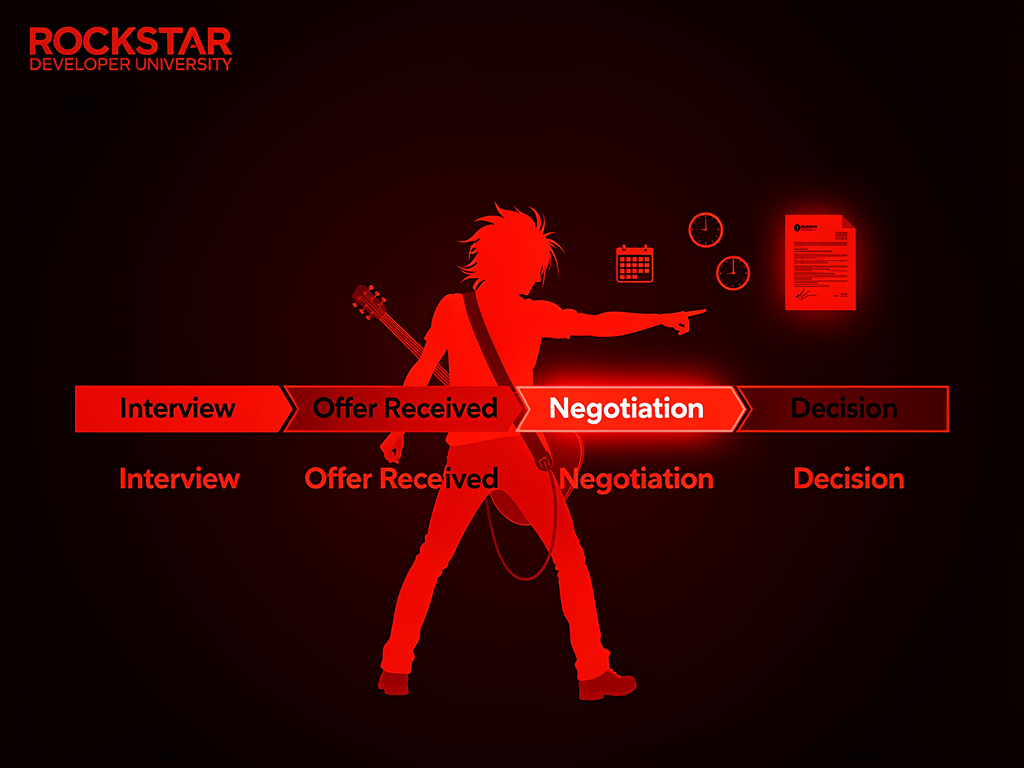
Typically after receiving the written offer, once you understand the full total rewards, including perks, PTO, stock options, and bonuses.
Is it okay to negotiate via email?
Absolutely. Many candidates prefer written communication because it allows them to think clearly and present their thoughts with confidence.
What if HR says the salary is non-negotiable?
Sometimes the hiring manager may not have direct authority to adjust salary, but may provide other perks, which still add value.
What if I'm relocating to a new city?
Cost of living matters, include it in your justification for an adjusted salary offer.
