There's a moment in almost every senior developer's career when the question shifts from "how do I write better code?" to "how do I help my team write better code?" That's the moment you start thinking about becoming an engineering manager.
I'm John Sonmez, founder of Simple Programmer and author of Soft Skills: The Software Developer's Life Manual. I've watched hundreds of developers make the jump into management. Some thrived. Others lasted six months, hated every calendar-packed minute of it, and clawed their way back to an IDE. The difference was never talent. It was understanding what the job actually is before saying yes to it.
The engineering manager role takes everything you know about building software and adds an entirely new dimension: leading people. You stop being judged on your commits and start being judged on your team's output. You trade keyboard time for calendar time. You move from solving technical puzzles to solving human ones.
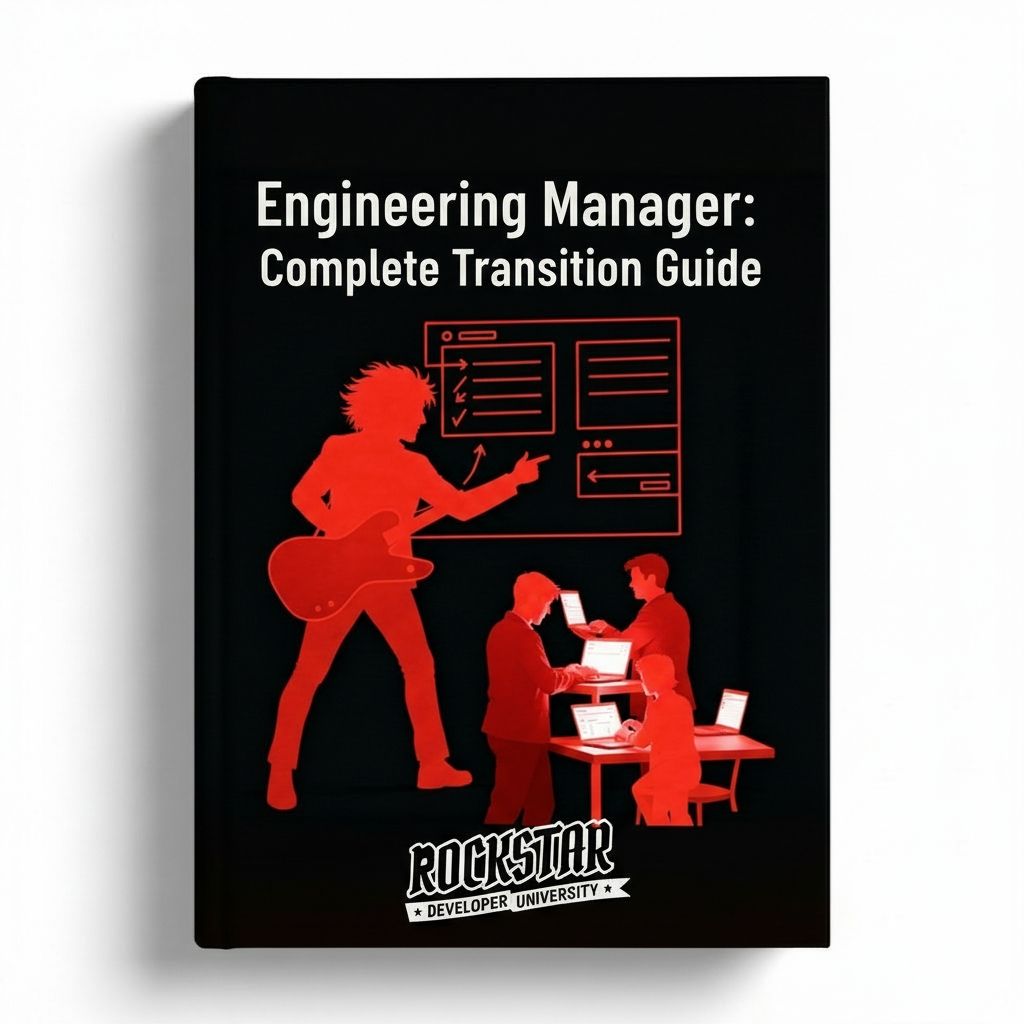
This guide covers the whole thing: what an engineering manager actually does day to day, whether the role fits you, the skills to build, the step-by-step roadmap from IC to EM, how to land your first management job, how to survive the first 90 days, and what the role pays in 2026 with real numbers from the BLS, Glassdoor, and Levels.fyi.
1. What an Engineering Manager Actually Does
Most engineering manager job descriptions read like they were written by someone who's never done the job. They list vague duties, tack on a bachelor's degree requirement, and call it a day. Here's what the position actually involves.
An engineering manager (EM) is a people manager responsible for the performance, growth, and delivery of an engineering team. Unlike a tech lead or staff engineer who stays an individual contributor, an EM's primary output is the team's output. Depending on company size, you'll directly manage 4 to 10 engineers. At a small startup you might still write code. At a big tech company you'll rarely touch a keyboard. Both are real engineering manager roles, just different flavors.
The day-to-day work falls into five buckets. People management is the biggest: 1-on-1s, performance reviews, career development conversations, and occasionally letting people go. You'll also spend a surprising amount of time on hiring alone. Writing job postings, screening resumes, running interviews, making offers. Technical oversight means reviewing architecture decisions, setting technical direction, and managing technical debt. Project delivery covers sprint planning, roadmap prioritization, removing blockers, and coordinating with product and design. Stakeholder management is communicating status to leadership, managing expectations, and representing your team's needs to the rest of the company. And culture building is creating an environment where engineers can do their best work, resolving conflict, and keeping the team healthy.
Then there's the stuff nobody puts in the job posting. Budget fights. Explaining to executives why a project is late. Convincing your team to spend a sprint on boring but important technical debt. That's the real job, and it's most of the job some weeks.
Here's what most people get wrong about the role: they think it's a promotion from senior engineer. It's not. It's a career change. You're going from building things yourself to building the environment where other people build things.
2. Engineering Manager vs. Tech Lead vs. Project Manager
Many developers conflate the engineering manager role with the tech lead role. They're related but meaningfully different, and understanding the distinction helps you decide which path actually fits you.
A tech lead is still an individual contributor. They own the technical vision for a project or team, mentor engineers, make architectural decisions, and write code. Their authority is technical. A tech lead is evaluated on the quality and direction of the technical work.
An engineering manager is a people manager. Their authority is organizational. They're accountable for the humans on the team, their performance, growth, and wellbeing, and for the team's collective delivery. An EM may not write any production code at all.
The confusion gets worse because many companies have a hybrid role called a tech lead manager (TLM), where one person carries both jobs. It's common at smaller companies and early-stage startups. It's also a brutal role that burns people out, though it's one of the fastest ways to prove you can manage.
While we're at it, let's clear up two more titles that get mixed into this. An engineering manager leads the people. A project manager leads the process: timelines, budgets, deliverables. A product manager leads the product direction: deciding what gets built and why. Three different jobs, even though some companies mash them together into one exhausted human.
If you want to grow your technical depth, pursue the staff or principal engineer track. If you want to multiply your impact through other people, the engineering manager path is for you.
3. Is the Engineering Manager Role Right for You?
Before you pursue the EM path, do an honest self-audit. Many engineers want the title without grasping the trade-off: you're giving up significant individual technical work to manage other people's careers and output. Some engineers make the transition and never look back. Others last six months and desperately want to return to coding.
Signs you might thrive as an engineering manager:
- You get more satisfaction from helping a junior engineer nail a difficult concept than from solving the problem yourself
- You find yourself thinking about team dynamics, communication gaps, and process inefficiencies, and you want to fix them
- You enjoy organizational politics in a strategic (not cynical) way
- You're energized by meetings and 1-on-1 conversations rather than drained by them
- You care deeply about people's careers and growth trajectories
And the signs the IC track is a better fit? You're most fulfilled when deep in a complex technical problem. You find people management draining and prefer clear, objective metrics of success. You'd resent giving up coding time. You're primarily motivated by technical mastery and depth.
Neither path is better. The best engineering organizations need excellent individual contributors just as much as they need excellent managers. Choosing management because it "looks like a promotion" is a recipe for misery, for you and for your team.
4. What Makes a Good Engineering Manager
A good engineering manager has strong communication skills. Period. That's the number one skill, and it's not close. You can be the best coder in the room, but if you can't explain a technical decision to a non-technical stakeholder, you'll struggle.
Technical skill still matters, though. You need enough engineering depth to earn your team's respect, catch a bad architectural decision, and hold an intelligent conversation about tradeoffs. Engineers can smell a manager who's purely a process person, and they'll lose trust fast.
Management fundamentals are the other half of the equation. Delegation, prioritization, basic financial literacy. These apply to engineering management just like they do to any other management position, and most engineers have never practiced any of them.
The best engineering managers I've worked with shared three traits. They were honest, even when the truth was uncomfortable. They protected their team from organizational noise. And they made decisions quickly, knowing that a good decision made fast beats a perfect decision made slow.
5. What You Need Before Making the Transition
Most engineering manager job descriptions list a bachelor's degree in computer science or an engineering field and five to ten years of software engineering experience. Some prefer a master's degree in engineering management or an MBA. But in software, experience beats credentials, and the real requirements are more nuanced than any posting admits.
Technical credibility is non-negotiable. Your team needs to respect you technically. This doesn't mean you need to be the best coder on the team. It means you understand what they're building, recognize bad architectural decisions, and can talk tradeoffs without faking it.
Leadership experience is what actually gets you hired. Have you led a project end to end? Mentored junior engineers? Coordinated across teams? Run a sprint? Helped resolve a production incident? These experiences are your proof of concept. Most hiring managers care far more about your informal leadership track record than your formal credentials, and most EM postings that ask for direct experience want two to three years of leading a team in some form.
Self-awareness and emotional intelligence round out the profile. Management requires you to give difficult feedback, handle interpersonal conflicts, and keep a team motivated when the roadmap changes for the third time this quarter. Engineers who lack self-awareness rarely succeed in management.
A realistic target: most engineers who make a successful transition to EM do so after 4 to 7 years as an IC, typically at the senior engineer level, after spending at least a year operating as an informal leader on their team.
6. 7 Skills You Must Develop Before Making the Leap
Technical skill got you here. People skill will take you there. Here are the seven capabilities you need to build deliberately before (and during) your transition:
- Active listening. Management is conversation-heavy. Most of it is listening. Practice truly hearing what people say instead of formulating your response while they're still talking. Great managers make their engineers feel genuinely heard.
- Giving feedback. Start giving feedback now, even as an IC. Get comfortable saying "I noticed X, the impact was Y, next time consider Z." The sooner you build the feedback muscle, the less awkward it will be in a management role.
- Conflict resolution. Teams have conflict. Your job is to surface it early and resolve it constructively, not to avoid it. Study negotiation frameworks like Crucial Conversations. Practice having uncomfortable conversations.
- Prioritization. As an EM, you will never have enough time to do everything. You'll be juggling recruiting, performance issues, roadmap alignment, technical debt conversations, and stakeholder updates, all at once. Get rigorous about what matters most.
- Writing and communication. Managers live in docs, emails, and Slack threads. Your ability to communicate clearly and concisely, especially in writing, determines how much influence you have across the organization.
- Project management fundamentals. You don't need a PMP certification, but you do need to understand how to break down work, estimate timelines, manage dependencies, and communicate status. Learn how to run a sprint, write a project brief, and track milestones.
- Coaching and career development. One of your primary jobs as an EM is helping your engineers grow. Learn how to have career development conversations, identify growth opportunities, and create individual development plans. Engineers stay at companies where their manager invests in their growth.
Moving into management is a bet that your judgment matters more than your keystrokes. AI is making raw coding cheap, so that bet only pays off if people already know your name and trust it. Our free Rockstar Engineer Blueprint shows you how to get known so the best offers come looking for you.
Get the Free Course7. The Step-by-Step Roadmap to Becoming an Engineering Manager
You don't wake up one day and get handed a management role. You build toward it deliberately. Here's the roadmap that actually works.
Step 1: Start leading without the title. The fastest way to get the EM title is to act like an EM before anyone gives it to you. Volunteer to mentor junior engineers. Offer to run sprint retrospectives. Lead a project end to end. Coordinate a cross-team initiative. Build a reputation as someone who gets things done through other people, over 12 to 18 months of visible informal leadership.
Step 2: Have an explicit conversation with your manager. Your manager won't read your mind. Tell them directly: "I'm interested in eventually moving into an engineering management role. What would I need to demonstrate to make that happen here?" This conversation puts your intent on record and surfaces the specific gaps you need to close. Many companies have internal paths to management that only open once you ask.
Step 3: Request a stretch assignment. Ask to officially onboard a new hire, run a team meeting, or lead a critical project. These structured opportunities give you management experience you can point to concretely in interviews.
Step 4: Build your management knowledge base. Read the foundational books: The Manager's Path by Camille Fournier is required reading. An Elegant Puzzle by Will Larson goes deep on the organizational mechanics of engineering teams. High Output Management by Andy Grove is timeless on multiplying your team's output.
Step 5: Find a management mentor. Identify an engineering manager you respect, inside or outside your company, and ask if they'd do occasional mentorship conversations. A good mentor who's been through the transition is worth more than any book or course.
Step 6: Apply internally first. Internal transfers to management are far easier than external ones because your track record is visible. When an EM opening appears on your team or an adjacent team, you're the known quantity. External candidates are a higher-risk hire for the same role.
Step 7: Target the right external roles. If no internal opportunity arises, target smaller companies where management roles are more accessible. Startups and mid-stage companies often promote senior engineers to management faster than FAANG companies, which have more formal career ladders.
8. How to Get Your First Engineering Manager Job
Landing your first EM role, whether internal or external, requires a different pitch than your technical interviews. You're now selling leadership, not code.
Reframe your resume and LinkedIn. Highlight every leadership-adjacent experience: mentoring, project ownership, cross-team coordination, hiring involvement. Use outcome-driven language. "Led team of 4 engineers to deliver X product feature in Y weeks" beats a list of technologies every time.
Build a leadership narrative. You need a coherent story about why you want to move into management and why you're ready. The story should be specific: what experiences have prepared you, what kind of manager you want to be, and what impact you want to have. Vague answers like "I want to help people grow" won't get you hired.
Prepare for the behavioral interview gauntlet. Engineering manager interviews are heavily behavioral. You'll face questions about how you've handled conflict, given difficult feedback, balanced competing priorities, and built team culture. Practice STAR-format answers for each scenario, and work through our full guide to engineering manager interview questions before you walk into the room.
Target the right companies and team sizes. For your first EM role, prefer managing a team of 4 to 6 engineers at a company that offers real mentorship for new managers. Some companies have formal new-manager programs. Others will throw you in the deep end. Know what you're signing up for.
Network into warm introductions. Many EM roles at good companies are filled through referrals. Identify EMs at companies you respect and build genuine relationships before you're job hunting. A warm introduction from someone inside the company dramatically increases your chances.
9. The First 90 Days as an Engineering Manager
You got the role. Now what?
The single most important thing you can do in your first 90 days is listen before acting. Resist the urge to make changes immediately. Your team has context, history, and established norms you don't have yet. Spend your first month in discovery mode.
Days 1 to 30: Listen and learn. Schedule 1-on-1s with every team member in your first two weeks. Ask open-ended questions. What's going well? What's most frustrating? What would you change if you could? What do you wish your previous manager had done differently? These conversations give you an unfiltered view of team health, technical debt, interpersonal dynamics, and morale.
Days 31 to 60: Identify quick wins and urgent fires. By now you should have a clear picture of the biggest problems. Prioritize ruthlessly. Address anything that's damaging trust or blocking delivery. Take action on at least one thing your team mentioned as a frustration, and do it visibly. This demonstrates that you listen and act.
Days 61 to 90: Establish your operating rhythm. By day 90, you should have a clear cadence: regular 1-on-1s, a team sync format that works, a way to track delivery and health, and an initial sense of each team member's strengths, growth areas, and career goals.
The cardinal sin of new engineering managers is trying to stay hands-on with the code to prove they're still technical. This splits your attention and sends a subtle signal that you don't trust your engineers to own the work. Let go of the code. Your team is your product now.
10. Common Mistakes New Engineering Managers Make
Forewarned is forearmed. Here's how new engineering managers derail, in roughly the order I've seen it happen.
Micromanaging technically. You were a good engineer, so you second-guess your team's technical decisions constantly. This signals distrust and stunts their growth. Learn to coach rather than direct.
Avoiding difficult conversations. A performance issue you don't address gets worse. A conflict you ignore festers. Shipping late without communicating early erodes stakeholder trust. New managers dodge hard conversations because they're uncomfortable. Good managers have them early, clearly, and compassionately.
Being too friendly, not enough manager. Transitioning from peer to manager on your own team is socially awkward. Some new managers try to stay best friends with everyone and avoid decisions that might upset people. Your job is to be fair, direct, and trustworthy, not universally liked.
Losing technical credibility entirely. On the other end, some new managers abandon technical work completely and lose the respect of their team. Maintain enough involvement to stay credible, through code reviews, architecture reviews, or technical strategy, even if you're not writing production code.
Solving problems instead of developing people. When an engineer brings you a problem, the instinct is to solve it. Instead, coach them to solve it. Ask: "What have you tried? What would you do if I weren't here?" Your goal is to make your team more capable, not more dependent.
Not managing up. Your job isn't just managing your team. It's also managing the relationship with your own manager and stakeholders. Keep your skip-level informed, communicate status proactively, and advocate for your team's needs and priorities.
11. Engineering Manager Salary in 2026
Now for the question everyone actually googles: what does this job pay?
Here's the short answer: the average engineering manager salary in the United States lands somewhere between $150,000 and $200,000 per year in base pay, depending on who you ask. The major data sources disagree with each other, so look at all of them:
| Source | Figure | What it measures |
|---|---|---|
| Bureau of Labor Statistics | $165,370 | Median annual wage, architectural and engineering managers |
| Glassdoor | $224,431 | Median total pay including bonus and additional compensation |
| Salary.com | $156,241 | Average base salary across all industries |
| ZipRecruiter | $146,868 | Average annual salary (about $70.61 per hour) |
| Levels.fyi | $352,000 | Median total comp for software EMs at top tech companies |
The spread is real. Glassdoor's March 2026 data puts the 25th to 75th percentile range at $181,446 to $285,372. Entry-level engineering managers can start around $120,000, while experienced managers at large companies pull $250,000 or more in base salary alone, before stock and bonus.
And if you're in software specifically, the ceiling goes much higher. At FAANG and other major tech companies, mid-level engineering managers regularly clear $300,000 in total compensation, and senior EMs with a few years in the role reach $500,000 or more. Per Levels.fyi, Amazon's software engineering manager compensation ranges from about $326,000 to over $1 million at the VP level, and Google's engineering managers start around $405,000 in total comp. At mid-size companies, total comp typically lands in the $180,000 to $280,000 range. At startups, base pay runs lower but equity stakes can be substantial.
What moves the number? Four factors dominate. Location first: San Francisco, San Jose, Seattle, New York, Boston, Austin, and Los Angeles consistently top the pay charts, though the cost of living in several of those cities eats a lot of the premium, so run the numbers before you move. Industry second: software pays the most, with fintech, major banks, and healthcare tech close behind. Experience third, but experience alone won't max you out. It's experience combined with results. And company size fourth: bigger companies pay more, full stop.
The job outlook is solid, too. The BLS projects employment of architectural and engineering managers to grow 4 percent from 2024 to 2034, about average across all occupations. This is a stable, well-paid career track.
Your negotiating power is your reputation. When every engineer ships the same AI-assisted code, the one people know by name commands the higher number. Get the free 5-day Rockstar Engineer Blueprint and start getting known so the best offers come to you.
Get the Free Course12. How to Maximize Your Engineering Manager Salary
This is the part where you can actually do something about your income.
First, do your research. Before any salary discussion, know what the average pay is for your specific role, in your specific city, at companies of your size. Glassdoor, Salary.com, and Levels.fyi will get you there in an evening.
Second, negotiate. I can't stress this enough. So many engineers and engineering managers accept the first offer they receive. That's leaving money on the table, sometimes tens of thousands of dollars of it.
Third, think total compensation, not base salary. Most EM roles include a target bonus of 10 to 20 percent of base. Equity is the bigger lever at tech companies: negotiate the initial grant size and the refresh schedule. And fight for the right level. Whether you're hired as an EM I, EM II, or senior EM has a huge impact on your comp band, so push for the highest level you can justify.
Fourth, build your personal brand. Engineering managers who are known in their industry, who speak at conferences, write about engineering leadership, or maintain a strong LinkedIn presence, consistently out-earn those who don't. When a hiring team already knows your name, you negotiate from strength.
Fifth, consider your specialization. Engineering managers in machine learning, cloud infrastructure, and cybersecurity command premium pay.
One important caveat: don't take a management role primarily for the money. At many companies, the IC track and the management track pay about the same at equivalent levels. A staff or principal engineer can earn just as much as an engineering manager, sometimes more, with less organizational complexity. Go into management because you want to multiply your impact through other people, not because you're chasing a salary bump.
13. The Career Path Beyond Engineering Manager
The engineering manager title isn't the end of the ladder. It's the first rung of a second ladder.
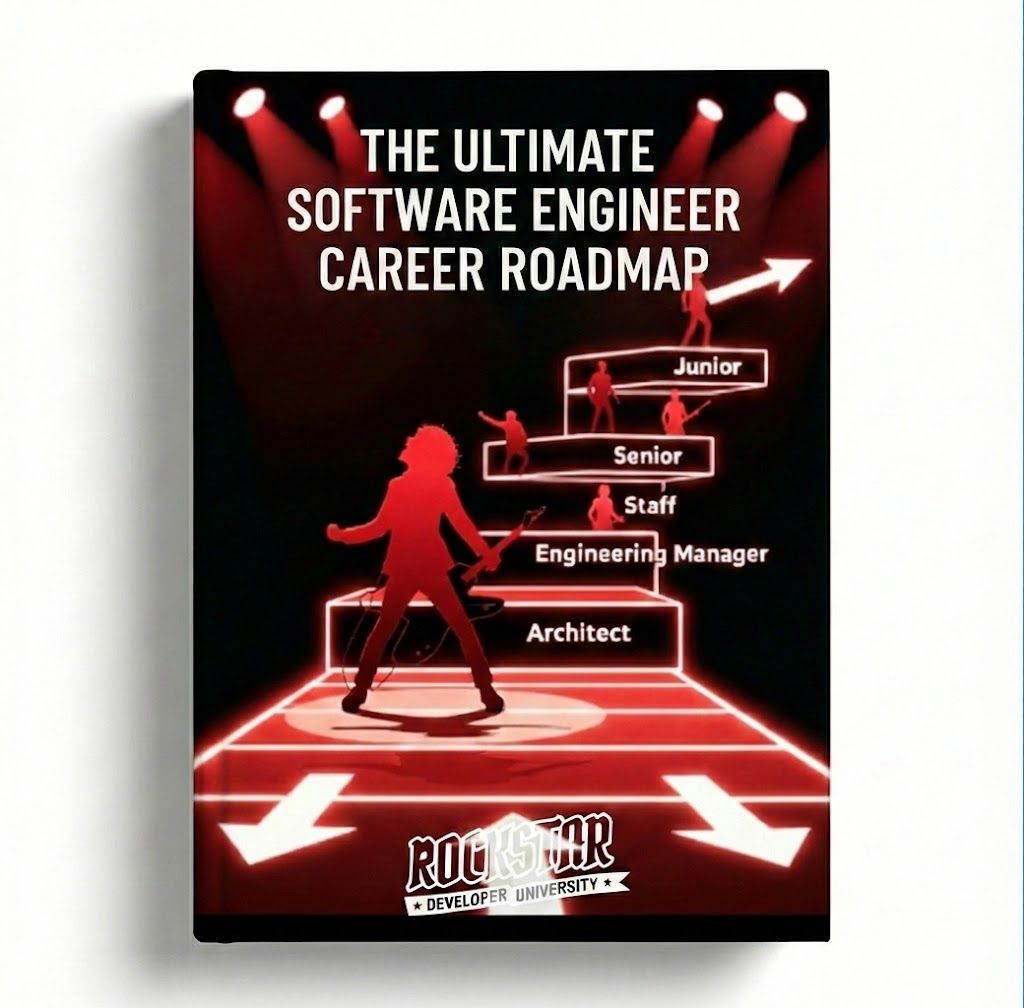
The typical progression runs team lead or EM, then senior engineering manager, then director of engineering, then VP of engineering, and eventually CTO. Each step takes you further from the code and deeper into organizational leadership: managing managers, owning budgets, setting multi-year technical strategy, and representing engineering to the board.
Compensation scales with it. Director and VP roles at large tech companies routinely cross $500,000 in total comp, and as noted above, VP-level packages at a company like Amazon can exceed $1 million. But so does the distance from the work that made you love this field in the first place. Climb deliberately, not by default.
14. Ready to Make the Leap?
Becoming an engineering manager is not a promotion in the traditional sense. It's a career change that happens to sit next to your current job. You're not becoming a better engineer. You're becoming a different kind of professional, one whose craft is developing people and enabling teams to do their best work.
The path is clear: build informal leadership experience, develop people skills deliberately, signal your intent to your manager, pursue internal opportunities first, and approach the transition with genuine curiosity about what makes humans and teams thrive.
Here's what I want you to do this week. Shadow an engineering manager at your company: ask to sit in on their team meetings and see what their day actually looks like. Start writing about engineering leadership, even if nobody reads it at first, because writing about your team's problems and how you'd solve them will sharpen your thinking. And volunteer to lead the next project: coordinate the work, run the stand-ups, report progress to stakeholders.
The engineers who become great managers are the ones who fall in love with the new craft, not the ones who take the role reluctantly because the IC ladder looked blocked. If you're genuinely excited about the idea of helping six engineers do what you used to do alone, that's your answer.
If you want the long-form playbook on how the IC and management tracks play out across a full career, my Complete Software Developer's Career Guide is the 700-page reference worth picking up. And when the interviews start, sharpen your answers with our guide to engineering manager interview questions linked above.
15. Frequently Asked Questions
The questions engineers ask most about making the move into management.
How long does it take to become an engineering manager?
Most engineers make a successful transition after 4 to 7 years as an individual contributor, typically at the senior engineer level. The clock that matters most is the 12 to 18 months of informal leadership before the title: mentoring junior engineers, leading projects end to end, and coordinating across teams. At larger companies with formal ladders, 5 to 10 years of engineering experience is the common baseline.
Do you need a degree to become an engineering manager?
Most engineering manager job descriptions ask for a bachelor's degree in computer science or an engineering field, and some prefer a master's in engineering management or an MBA. In software, though, experience beats credentials. Five to ten years of engineering experience plus a demonstrated leadership track record matters far more to hiring managers than an extra degree.
How much does an engineering manager make?
Base salaries in the US typically run $150,000 to $200,000. The BLS reports a median of $165,370 for architectural and engineering managers, and Glassdoor puts median total pay around $224,431. In software the numbers climb fast: Levels.fyi shows a median around $352,000 in total compensation at top tech companies, with senior engineering managers clearing $500,000 or more once stock and bonuses are included.
Is an engineering manager higher than a tech lead?
In most organizations, yes. A tech lead is an individual contributor who owns technical decisions and code quality. An engineering manager carries organizational authority: people management, hiring, performance reviews, budget, and delivery accountability. Some companies combine both into a tech lead manager (TLM) role, which is one of the fastest ways to prove you can manage but also one of the fastest ways to burn out.
Do engineering managers still write code?
It depends on the company. At startups, engineering managers often still write production code. At large tech companies, they rarely touch a keyboard and focus on people, delivery, and strategy. Either way, new EMs should resist clinging to the code to prove they're still technical. Staying credible through code reviews and architecture discussions works better than competing with your own team for tickets.
Should you become an engineering manager for the money?
No. At many companies the IC and management tracks pay about the same at equivalent levels, and staff or principal engineers sometimes out-earn engineering managers with less organizational complexity. Take the EM path because you want to multiply your impact through other people. If you only want the compensation, the senior IC track will get you there without giving up the work you love.