
Quick summary
Everything you need to know about becoming an engineering manager, from daily responsibilities to career growth
You've been writing code for years. You're good at it. Maybe you're one of the best on your team. And now someone's asking if you want to move into management. Or maybe you're already eyeing that engineering manager role because you see problems that nobody else is fixing. Bad processes. Talented engineers leaving. Projects that keep missing their timeline. I’m John Sonmez, founder of Simple Programmer and author of Soft Skills: The Software Developer’s Life Manual.
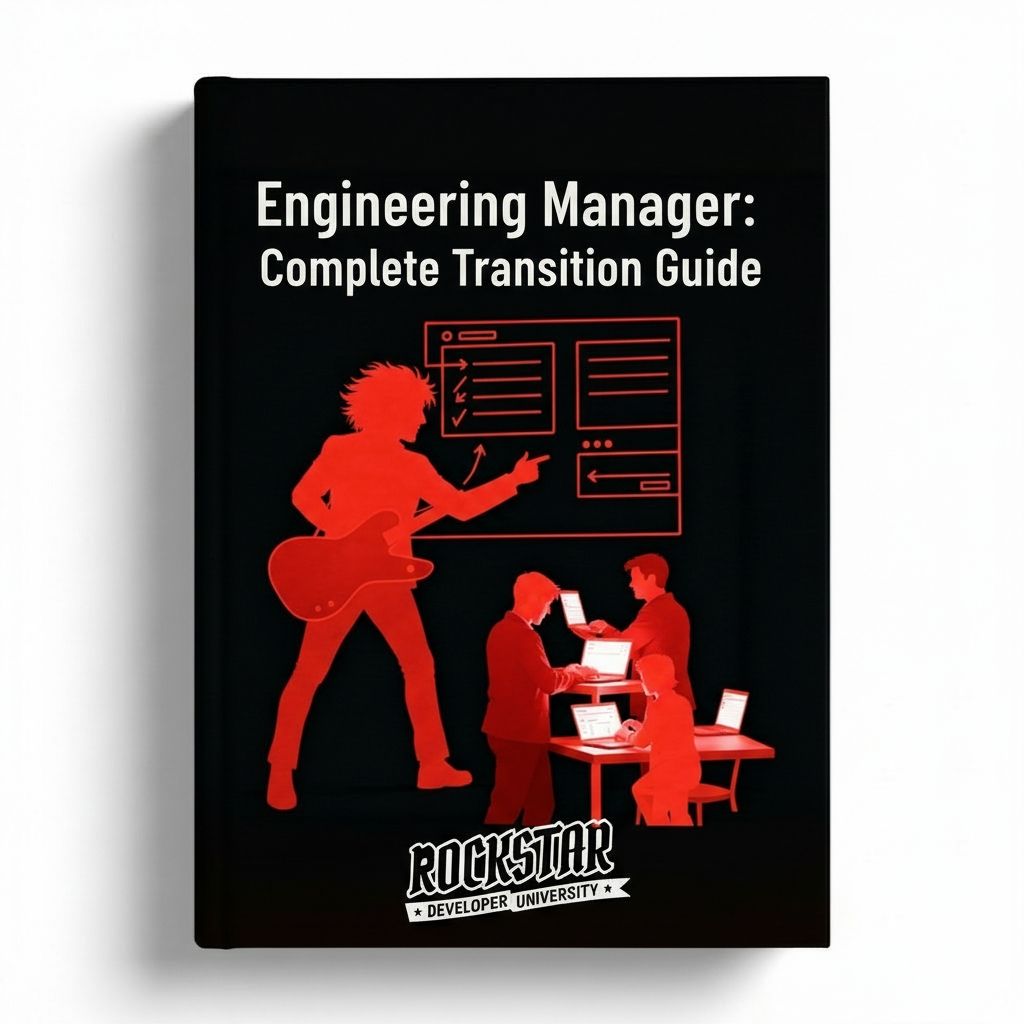
Here's what nobody tells you about becoming an engineering manager. The job isn't what most people think it is. It's not about being the best coder in the room. It's not about telling people what to do. And it's definitely not a promotion in the traditional sense. It's a career change.
I've watched hundreds of engineers make this transition. Some thrive. Some hate it and go back to coding within a year. The difference usually comes down to understanding what the engineering manager role actually requires before you take it.
1. What Does an Engineering Manager Do?
An engineering manager leads an engineering team and takes responsibility for their output, growth, and well-being. That's the simple version. The day-to-day reality is messier. You'll spend your time in one-on-ones, planning meetings, stakeholder conversations, and hiring interviews. You'll do code reviews some weeks and not touch code at all other weeks. You'll oversee projects from roadmap to delivery and deal with everything that goes wrong along the way.
Engineering managers are responsible for making sure the right work gets done at the right time. That means resource allocation, prioritization, and constantly balancing what the business needs with what the engineering team can realistically deliver. You're the person who translates between technical decisions and business goals.
The engineering manager role varies a lot depending on company size. At a startup, you might be writing code half the time and managing people the other half. At a large company, you might not write any code at all. Engineering manager duties typically include running sprint planning, conducting performance reviews, managing the hiring process, removing blockers for your team, and communicating progress to upper management and stakeholders.
Engineering managers also handle the stuff nobody sees. Resolving conflict between team members who don't get along. Coaching someone through a rough patch. Making the case to leadership for more headcount. Fighting to keep technical debt from drowning the team.
2. What Makes a Good Engineering Manager
Technical skills matter, but they're table stakes. What makes a good engineering manager is the ability to multiply other people's output. You stop measuring yourself by the code you write and start measuring yourself by what your team ships.
The best engineering managers I've seen share a few traits. They listen more than they talk. They make decisions quickly when they need to and slowly when they can afford to. They protect their team from organizational chaos while keeping the team aligned with company goals. They're honest, even when the truth is uncomfortable.
Communication is probably the most important skill. Engineering managers must be able to explain technical concepts to non-technical people. They need to give feedback that actually changes behavior. They need to write clear documents, run productive meetings, and present to executives without losing the room.
3. Engineering Manager vs. Project Manager vs. Product Manager
People confuse these roles all the time. They overlap in some areas, but they're fundamentally different jobs.
A project manager focuses on execution. They track timelines, manage dependencies, and make sure the project ships on time. They don't manage people directly. They manage processes.
A product manager owns the "what" and "why." They decide which features to build based on customer needs, market research, and business strategy.
An engineering manager owns the "how" and the "who." How will the team build what the product manager wants? Who will work on what? How do we grow these engineers into senior engineers and beyond?
The best engineering managers are known leaders before anyone hands them the title. Another cert won't get you there. As AI makes raw coding cheap, a reputation is what earns you the role and the offers. The free Rockstar Engineer Blueprint shows you how to become the developer your industry knows by name.
Get the Free Course4. How to Become an Engineering Manager
There are two common paths. The first is growing into the role at your current company. The second is interviewing for the management position at a new company. Both work, but they require different strategies.
If you want to grow into the role internally, start taking on leadership responsibilities before you have the title. Volunteer to lead a project. Mentor a junior engineer. Run a few meetings. Take ownership of a process that's broken and fix it.
The biggest mistake engineers make is waiting to be asked. Don't wait. Tell your manager you're interested in a career in engineering management. Ask what gaps you need to fill.
5. Education and Engineering Management Degrees
Do you need a degree in engineering management to get the job? No. Most engineering managers in software come from computer science or software engineering backgrounds and learn management on the job. A bachelor's degree in a technical field is common, but it's your work experience and track record that matter most.
That said, some people pursue formal education in engineering management. A master's degree in engineering management (MEM) combines technical coursework with business and management skills. These management programs can be valuable if you're transitioning from a non-software engineering field.
6. Engineering Manager Salary and Career Growth
Engineering managers typically earn more than individual contributor engineers at the same level, though the gap varies by company and location. At top tech companies, senior engineering managers can earn $200,000 to $400,000 or more in total compensation.
Career growth for engineering managers follows a clear path. You start managing a single team. Then you manage managers. Eventually, you might oversee an entire engineering organization. The skills that got you to the first level won't be enough for the next.
Some engineers move into management for the money and hate it. They miss coding. They don't like meetings. They find people problems exhausting. If that's you, there's no shame in going back to an individual contributor track.
7. Do Engineering Managers Write Code?
This might be the most debated question in the industry. The answer is: it depends. Some engineering managers write code regularly. Others haven't opened an IDE in years. Both can be effective.
Here's my take. You should stay technical enough to make good technical decisions, ask the right technical questions, and earn the respect of your team. You don't need to be the best coder on the team.
8. The Engineering Manager's Role in the Age of AI
Will engineering managers be replaced by AI? No. But the job is changing fast. AI is making individual engineers more productive, which means smaller teams can ship more. That changes the math on team size, hiring, and what engineering managers need to focus on.
The managers who will thrive are the ones who treat AI as a tool, not a threat. They'll help their teams use AI to unblock themselves faster, automate repetitive technical work, and focus on the creative problem-solving that humans still do better.
You already know AI is changing what your team needs. The managers who thrive are the ones the industry already knows by name, so the best roles and offers come to them. Get the free 5-day Rockstar Engineer Blueprint and become one of them.
Get the Free Course9. Common Mistakes New Engineering Managers Make
The first mistake is trying to do everything yourself. You were promoted because you're a great engineer. Now you're tempted to jump in and fix every technical problem. Don't. Your job is to build a team that can solve problems without you.
The second mistake is avoiding difficult conversations. That engineer who's been underperforming for months? You need to address it. Most new engineering managers let problems fester because confrontation feels uncomfortable. The longer you wait, the worse it gets.
The third mistake is neglecting your own growth. You're so busy helping everyone else grow that you forget to invest in yourself. Read books on management. Find a mentor who's been in a senior manager role. Join communities of engineering managers who share what they're learning.
10. Taking Action
If you're thinking about becoming an engineering manager, here's what I want you to do this week. Pick one thing from this list and actually do it.
- Talk to your current manager about your interest in leadership and ask for one leadership opportunity you can take on right now
- Volunteer to mentor a junior developer on your team or lead a project that needs someone to step up and own it
- Start building your personal brand by writing about engineering leadership, because the best engineering manager candidates are the ones people already think of as leaders before they get the title
The path from software engineer to engineering manager isn't about waiting for permission. It's about showing up as a leader before anyone asks you to. The engineers who build their reputation through content, speaking, and community involvement get promoted faster and get better offers when they look externally.
Your personal brand is what separates you from every other engineer who wants to move into management. When a recruiter searches for an engineering manager candidate and your name comes up because you've written about engineering leadership, spoken at meetups, or built a following around your expertise, you've already won half the battle. Don't just be good at your job. Be known for being good at your job.
If you want the IC-to-management transition mapped out alongside the rest of a developer's career arc, John's The Complete Software Developer's Career Guide is the longest-form reference on it.
Explore more on