
Quick summary
The complete roadmap to becoming a full-stack developer, from HTML basics to senior engineer and beyond.
If you want to become a full stack developer, you need more than just a vague plan to "learn coding." You need a roadmap. A real one with specific skills, a clear sequence, and honest expectations about what it takes to become proficient at building both the front-end and back-end of web applications. I'm John Sonmez, founder of Simple Programmer and author of Soft Skills: The Software Developer's Life Manual.
I've coached thousands of developers through career transitions, and the full-stack developer career path is one of the most common questions I get. Everyone wants to know: what do I learn first? How long does it take? Is full stack development even worth it anymore with AI changing everything? These are all fair questions, and I'm going to answer every one of them.
The short answer is yes, the full-stack developer career path is absolutely worth pursuing in 2026. Companies still need people who can work across the entire stack, and a developer who understands both frontend and backend is worth more than two specialists who can't communicate with each other. But you need to approach it the right way.
1. What Does a Full Stack Developer Do?
A full stack developer builds both the client-side (front-end) and server-side (back-end) of websites and applications. You're the person who can take a project from concept to deployment without needing to hand off pieces to other developers. That doesn't mean you always work alone. It means you understand the entire stack well enough to contribute anywhere. Think of a full-stack developer as a software engineer who can work with databases, build user interfaces, and write backend code all in the same afternoon.
On the front end, a full-stack developer works with HTML and CSS plus JavaScript to build the user interface that people actually see and interact with. Front-end development is where user experience design, responsive layouts, and making sure everything looks and works right across different devices and browsers all come together. A strong front-end developer understands how the UI connects to the rest of the application.
On the back-end, you write code that handles server logic, database management, business logic, APIs, and authentication. You might use a combination of programming languages like Node.js, Python, Java, PHP, or Ruby on Rails depending on the tech stack your company uses. You build the systems that store data, process requests, and make the front-end web experience actually work. As a back-end developer, you also need to work with databases and understand how different types of databases handle different workloads.
Full-stack developers also handle the glue between frontend and backend. You build and consume APIs, manage version control with Git, and understand the software development lifecycle from planning through deployment. A single software developer who can do all of this is extremely valuable, which is why full-stack developer jobs consistently rank among the most in-demand positions in tech.
2. Full Stack Developer Roadmap: Skills You Need to Become a Full-Stack Developer
Here's your developer roadmap. I'll break this down into phases because trying to learn everything at once is how most people burn out and quit. The skills you need to become a full-stack developer are extensive, but they build on each other if you follow the right sequence.
Phase 1: Front-End Fundamentals
Start here. Every full-stack developer needs to master HTML, CSS, and JavaScript before touching anything else. HTML structures your content. CSS styles it. JavaScript makes it interactive. These three technologies are the foundation of every web application, and you can't skip them.
HTML is straightforward. You can learn the basics in a week. CSS takes longer because layouts, responsiveness, and animations have real complexity. JavaScript is where most beginners hit their first wall. Don't rush through it. Spend time understanding variables, functions, DOM manipulation, and asynchronous coding patterns. If your JavaScript foundation is weak, everything that comes later will be harder.
Once you're comfortable with vanilla JavaScript, pick a front-end framework. React is the most popular choice in 2026, and you should learn React because it'll open the most doors for full-stack developer positions. Angular and Vue.js are also solid options, and you'll find many frameworks and libraries built around these tools. Learn React first, then explore others if you want. Focus on building a few real projects with your chosen framework before moving on.
Phase 2: Back-End Development and Database Skills
Now it's time to learn the back end. Pick a programming language and backend framework. Node.js is the most natural choice for full-stack developers because it uses JavaScript, which you already know. With Node.js and Express.js, you can build APIs, handle server logic, and connect to databases using the same language you use on the frontend.
If you prefer Python, Django or Flask are excellent choices. Java with Spring Boot is common in enterprise environments. PHP with Laravel still powers a huge portion of the web. The specific programming language matters less than understanding the concepts: routing, middleware, authentication, error handling, and REST API design. What matters is that you can write code that handles real business requirements on the back end.
You also need to learn databases. Start with SQL and a relational database like PostgreSQL or MySQL. Understand how to create tables, write queries, and design schemas. Then learn a NoSQL database like MongoDB for document-based storage. Understanding different types of databases and when to use each one is a key full-stack development skill. Full-stack development requires you to move data between your frontend, backend, and database, so you need to be comfortable with all three.
Phase 3: DevOps, Deployment, and the Full Picture
A complete full-stack developer understands deployment. Learn how to use Git and GitHub for version control (if you haven't already). Learn how to deploy software applications to cloud platforms. Understand basic CI/CD pipelines. You don't need to become a DevOps expert, but you should be able to take an application from your local machine to a live server without someone else doing it for you.
At this phase, you should also learn about testing, security basics, and performance optimization. These aren't glamorous topics, but they separate a junior full stack developer from someone who's actually ready for professional full-stack developer positions. Prospective employers want to see that you can build software that's not just functional but reliable. The knowledge and skills you pick up in this phase round out your full-stack development skills and make you a much stronger candidate when it's time to find a job.
3. How Long Does It Take to Become a Full-Stack Developer?
Can I learn full stack in 2 months? Honestly, no. Not if you want to be genuinely job-ready. You can learn the basics of HTML, CSS, and JavaScript in two months, but to learn full-stack development at a professional level requires depth across multiple technologies. It usually takes 6 to 12 months of focused, consistent work to develop the knowledge and skills you need to become a real full-stack developer.
If you're coding 3-4 hours a day and working on real projects, you can reach a junior full stack developer level in about 6-9 months. If you're doing a coding bootcamp full-time, some programs compress this into 12-16 weeks, but you'll still need months of hands-on experience after graduation before you're truly ready for the job hunt.
The developers who learn fastest are the ones who build things. Not just tutorials. Real projects. Working on real projects teaches you how to debug, how to read documentation, and how to deal with the chaos of actual web development. A portfolio of 3-5 solid projects will do more for your career than any certificate.
Learning every layer of the stack is the easy part. Now that AI ships the same code for everyone, the full-stack dev who gets the offer is the one hiring managers already know by name. The free Rockstar Engineer Blueprint shows you how to become that developer.
Get the Free Course4. Is Full-Stack Development Worth It in 2026?
Yes. Here's why. The demand for full-stack developers hasn't gone down despite the rise of AI coding tools. Companies still need people who understand the entire stack because most real-world software applications are too complex for specialists who only know one piece. A developer who can work across frontend and backend, understand databases, and handle deployment is still one of the most versatile hires a company can make. The development career outlook for full-stack roles remains strong.
The average salary for a full stack developer in the United States ranges from $90,000 to $150,000 depending on experience and location. Senior full-stack developers and full-stack engineers at major tech companies earn $150,000 to $250,000 or more. Job growth for web development roles continues to outpace most other careers, and full-stack positions account for a significant share of developer jobs posted on job boards.
Will AI replace full stack dev roles entirely? No. AI tools like GitHub Copilot make developers more productive, but they can't replace the judgment, architecture decisions, and problem-solving that a skilled software engineer brings. The developers who combine full-stack coding skills with the ability to think through complex problems will be more valuable, not less, as AI tools become standard parts of the development workflow.
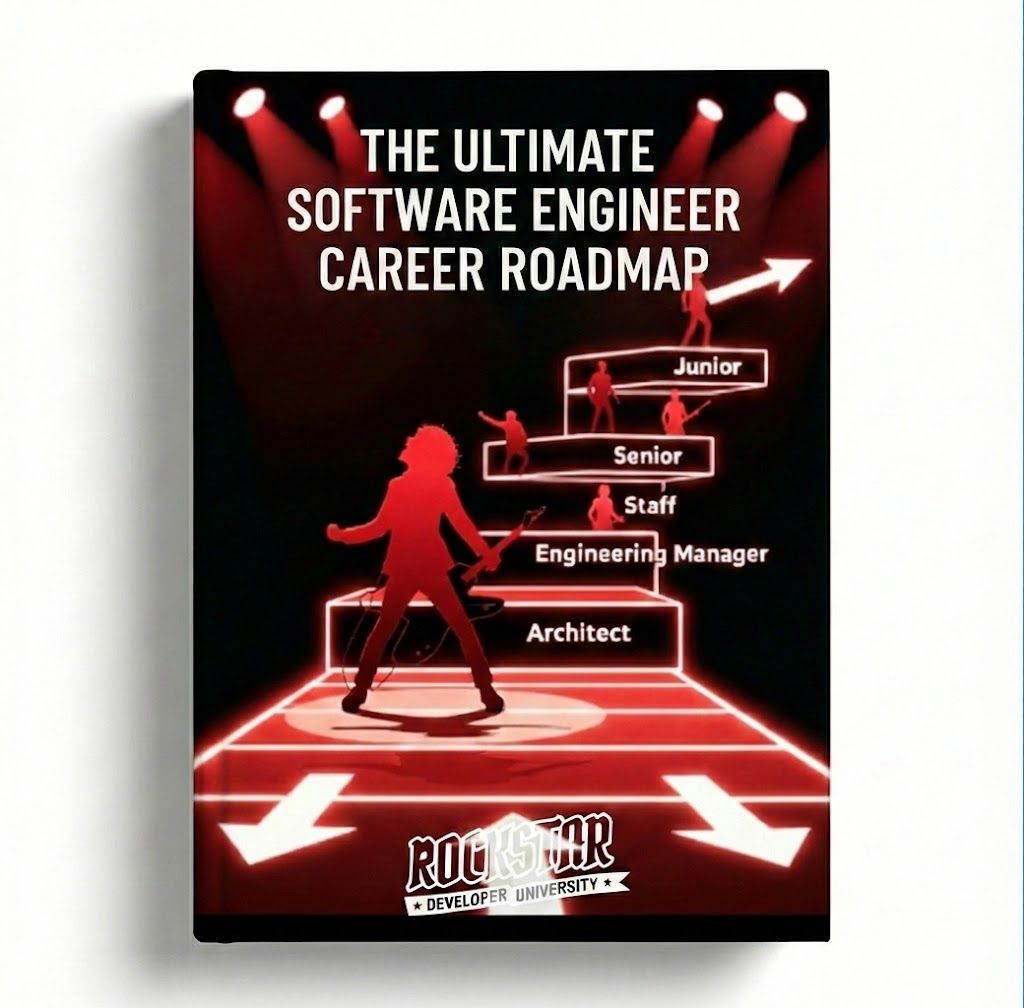
5. Full-Stack Developer Career Path: From Junior to Senior Full-Stack Engineer
Once you've built your skills and started applying to jobs, here's what the full-stack developer career path typically looks like.
Junior Full Stack Developer (0-2 years): You're building features under guidance, learning your company's tech stack, and getting comfortable working on both sides of the stack. You'll make mistakes. That's fine. The goal is to learn new skills fast and become someone your team can rely on. Entry-level full-stack developer jobs pay $70,000 to $100,000.
Mid-Level Full-Stack Developer (2-5 years): You work independently on full features. You can take a task from design to deployment. You're starting to mentor junior developers and contribute to architectural discussions. At this point, you should also be learning new technologies and expanding your toolset. Salary ranges from $100,000 to $140,000.
Senior Full Stack Developer (5+ years): You're leading projects, making tech stack decisions, and designing systems. A senior web developer or full-stack engineer at this level influences how the entire application is built. You're also the person who evaluates new technologies and decides what the team should adopt. Senior full-stack developer positions pay $140,000 to $220,000, and higher at top companies.
Beyond Senior: From here, the developer career path branches into engineering management or deeper technical roles like architect or principal engineer. Full-stack experience is particularly valuable in both tracks because you understand the entire system, not just one piece of it.
6. What Technologies Should a Full-Stack Developer Learn? HTML, CSS, JavaScript, and More
Here's a practical tech stack for a full-stack developer in 2026. This covers the most in-demand skills based on job postings and what companies are actually building with.
Front-End: HTML, CSS, JavaScript, React (or Angular/Vue.js), responsive design, CSS frameworks like Bootstrap or Tailwind. Learn how to build accessible user interfaces that work across devices.
Back-End: Node.js with Express (most popular for full-stack), or Python with Django/Flask, or Java with Spring Boot. Understand backend code patterns like MVC architecture, middleware, and authentication.
Databases: SQL (PostgreSQL or MySQL), NoSQL (MongoDB), basic database management, ORM tools. Understand when to use relational vs. document databases.
DevOps and Tools: Git for version control, deployment platforms (Vercel, AWS, Heroku), basic CI/CD, containerization basics with Docker. Understanding the software development lifecycle end to end gives you an edge over developers who can only write code but can't deploy it.
APIs and Integration: REST APIs, GraphQL basics, third-party API integration, WebSockets for real-time features. APIs are the bridge between your front-end and back-end, and you need to be comfortable building and consuming them.
Full-stack skills get your foot in the door. Becoming the developer your industry knows by name is what makes the best jobs, raises, and offers come to you. Get the free Rockstar Engineer Blueprint and learn the 5 mistakes that keep good developers invisible and overlooked.
Get the Free Course7. How to Get Hired as a Full-Stack Developer
The job hunt for full-stack developer positions can be competitive, especially at the entry level. Here's what actually works to get hired, based on what I've seen coaching developers through this process.
First, build a portfolio. Three to five complete projects that show you can build websites and apps from front end to back end. Don't just follow tutorials. Build something original. Upload your code to GitHub so prospective employers can review it. Job seekers who can show real projects get callbacks at a much higher rate than those who just list skills on a resume. Make sure each project shows you can work across the front-end and back-end of a real application.
Second, learn how to talk about your work. When applying to jobs, you need to explain what you built, why you made the technical decisions you did, and what you'd do differently next time. This shows prospective employers that you think like a professional software developer, not just someone who copied code from Stack Overflow. Review job postings carefully and tailor your applications to match what each company is looking for.
Third, don't wait until you feel "ready." You'll never feel 100% ready. Start applying for jobs when you can build a complete full-stack application independently. Apply broadly. Customize your resume for each role. Follow up. The difference between developers who find a job quickly and those who don't often comes down to persistence, not skill level.
8. Taking Action
Here's your next step. If you're just starting out, begin with HTML and CSS plus JavaScript today. Not tomorrow. Today. Set up a learning plan that covers the full stack developer roadmap I outlined above and give yourself a realistic timeline of 6-9 months to reach the junior level.
If you're already coding but haven't committed to the full-stack path, pick a backend programming language and build one complete full-stack project this month. Deploy it. Put it in your portfolio. That one project will teach you more about full-stack development than another hundred hours of tutorials.
If you're a working full-stack developer looking to advance your career, focus on career development. Build your personal brand. Contribute to open source. Learn new skills outside your comfort zone. Apply for senior roles even if you're not sure you're ready. The career opportunities for experienced full-stack developers are excellent, and they only get better as you build your reputation.
The full-stack developer career path rewards people who build things. So go build something.
John's The Complete Software Developer's Career Guide goes deeper on every stage of this path, from learning to specialization to senior leadership. It's the operating manual for developer careers.
Explore more on