
I'm John Sonmez, and I'm going to be blunt with you. If you're a senior software engineer still commuting to an office five days a week, you're leaving money on the table. Probably six figures worth.
The remote software engineer jobs market has matured. It's not 2020 anymore, where remote meant chaos and Zoom fatigue and companies grudgingly letting you work from your spare bedroom. In 2026, the best companies in the world have built entire engineering organizations around remote work. GitLab has over 2,000 employees in 65+ countries and has never had an office. Automattic (the company behind WordPress) has been remote since 2005. These aren't experiments. These are billion-dollar businesses that proved remote software engineering works at scale.
But here's what most developers get wrong about the remote job market. They treat it like the regular job market but with a location filter. They hop on LinkedIn, filter for "remote," and spray their resume at 200 postings. Then they wonder why they hear nothing back. That approach is broken, and I'm going to tell you exactly why it's broken and what to do instead.
This guide is for experienced software engineers. If you've got 10+ years of experience and you're still applying to remote software engineer jobs through job boards like everyone else, you're playing the game wrong. The best remote positions don't go to the best applicants. They go to the developers who are already known. Let me show you what that looks like and how to get there.
1. The State of Remote Software Engineering in 2026
Let's set the stage with real numbers because I'm tired of the "remote work is dying" narrative that lazy journalists keep pushing.
According to Scoop's Flex Report, 67% of tech companies still offer fully remote or hybrid options. That number dropped from a pandemic high of around 80%, sure. But it stabilized. The companies that went back to office either did it already or aren't going to. What you're left with is a stable, massive market of remote software engineer jobs at companies that are remote by design, not remote by accident.
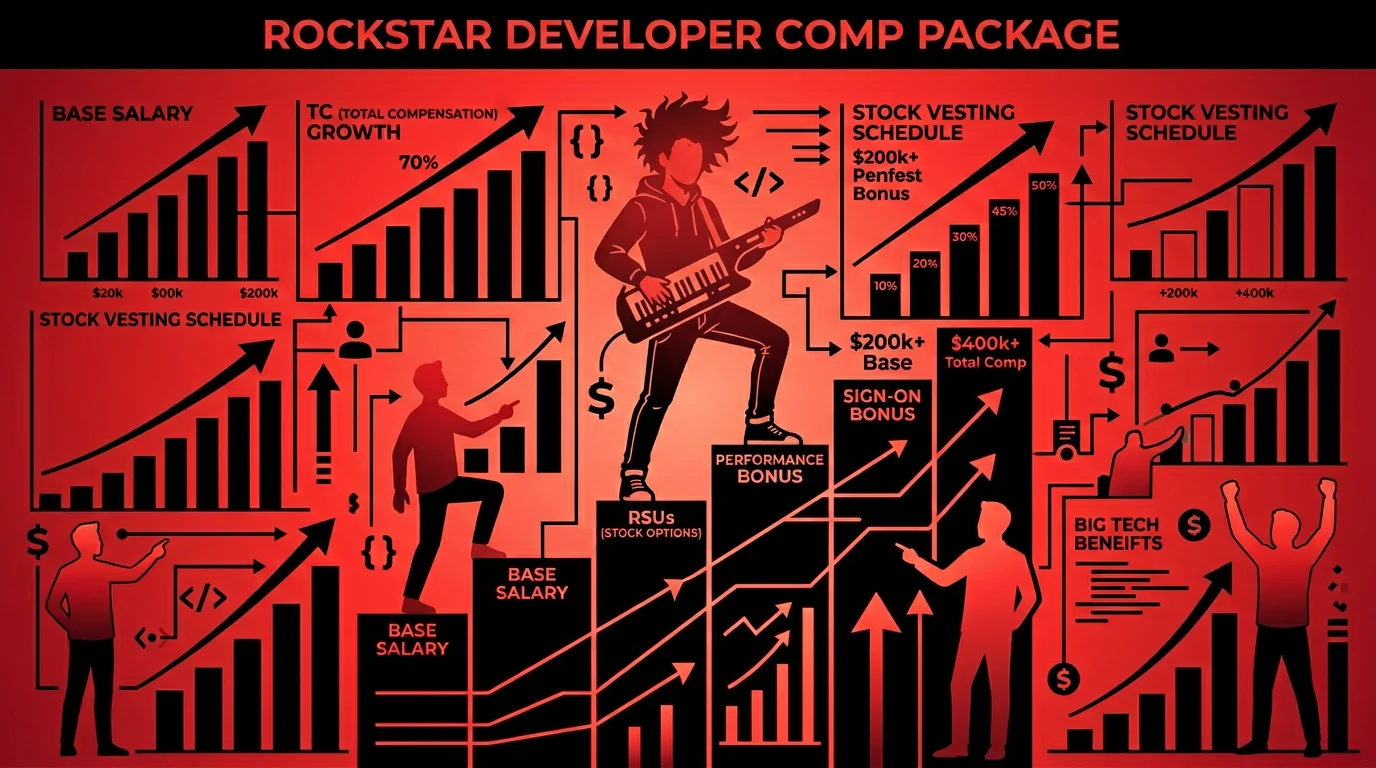
The salary data tells an even better story. Remote senior software engineers at top companies earn between $180,000 and $400,000+ in total compensation. GitLab pays senior backend engineers between $154,000 and $342,000 depending on the role level and your geographic factor. Shopify's senior remote engineers pull in $200,000 to $350,000 in total comp. Coinbase was famously paying remote engineers $300,000 to $450,000+ at the staff level when they went fully remote.
Cloud computing has made remote software engineering not just possible but actually preferable in many cases. When your entire infrastructure lives in AWS or GCP, it doesn't matter if your engineer is in San Francisco or Sao Paulo. The deploy pipeline doesn't care about your zip code. Modern software development workflows are built for distributed teams by default. AI tools have made remote collaboration even smoother. Pair programming tools, AI-assisted code review, async communication platforms. The tooling gap between remote and in-office has essentially closed.
Here's the thing that most people miss: remote isn't just a perk anymore. For the best companies, it's a competitive advantage. They can hire the absolute best person for the role regardless of geography. That means the talent bar at top remote companies is actually higher than at local-only shops. Which means if you can clear that bar, you're surrounded by exceptional engineers. That's the environment where you grow the fastest.
2. Remote Full-Stack and Platform Software Engineer, Frontend, Android, and Analytics Roles Available Now
The variety of remote software engineer jobs in 2026 is staggering. This isn't just "work from home web developer" territory anymore. Every specialization in software engineering has remote options, and some specializations are almost entirely remote by nature.
Full-stack remote roles are the largest category. Companies like Shopify, Automattic, and Basecamp hire full stack engineer positions where you move between frontend React or Vue code and backend services in Ruby on Rails, Python, or Go. A senior full-stack and platform software engineer at these companies will manage full-stack systems end to end, from designing APIs to deploying production services. Full stack is the most versatile remote skill set because you can contribute to any part of the product without needing someone in the same room to hand off work. If you're a full-stack developer with 10+ years of experience, you're in the highest-demand category for remote positions. Many job postings now list titles like "Full-Stack and Platform Software Engineer" to signal that the role spans both application code and platform integration.
Backend and infrastructure roles are the second biggest bucket. Cloud computing expertise (AWS, GCP, Azure) combined with languages like Go, Rust, Python, or Java makes you incredibly hireable for remote software engineering work. These roles often pay more than full-stack positions because the problems are harder and the impact is larger. Backend engineers who understand distributed systems, microservices, scalability, and high-availability architecture are the ones commanding $250K+ remote salaries. At the sr software engineer and staff level, you're expected to lead architecture decisions, design end-to-end systems, and automate infrastructure using tools like Terraform and Pulumi. Staff backend product software engineer roles at companies like GitLab or Dropbox carry the responsibility of shaping product direction while keeping the codebase maintainable at scale.
DevOps and Site Reliability Engineering (SRE) roles are overwhelmingly remote. The nature of the work (managing cloud infrastructure, CI/CD pipelines, monitoring and alerting) is inherently remote-friendly. You're already working through terminals and dashboards. Senior SRE engineers implement observability tools like Datadog and Grafana, manage airflow pipelines for data orchestration, and use ArgoCD for GitOps-style continuous delivery. GitLab's entire infrastructure team is remote. Most SRE teams at startups are distributed. If you have DevOps skills, finding remote work is probably the easiest it's ever been.
AI and machine learning engineering roles have exploded in the remote market. Every company building artificial intelligence products needs ML engineers, and there simply aren't enough of them concentrated in any single city. Companies like Hugging Face, Weights & Biases, and Scale AI have large remote engineering teams. Remote ML engineer salaries range from $200,000 to $500,000+ at the senior and staff levels. If you've got experience with machine learning, natural language processing, or AI infrastructure, remote companies are competing fiercely for your attention. If you're aiming straight at that work, my guide to AI engineer jobs breaks down the roles, the pay, and which companies are hiring right now. The hottest skill combinations we see in remote job postings right now are machine learning • natural language processing • software • conversational AI, and companies pay a premium for engineers who can work across multiple AI disciplines.
Data engineering and analytics roles are another massive remote category. Business intelligence and big data analytics positions let you work with applied systems that process terabytes of information. Companies need engineers who can build data pipelines, optimize performance of query engines, and deliver dashboards that drive growth initiatives across the organization. These remote-eligible roles span industries from fintech to healthcare to e-commerce, and common job listing requirements include software • business intelligence • big data analytics as core competencies.
Mobile engineering (iOS and Android) is surprisingly remote-friendly. You'd think mobile devs would need to be on-site for device testing, but modern CI/CD tools and cloud device farms have made that unnecessary. Companies like Block (formerly Square), Airbnb, and several financial technology startups run fully remote mobile teams. These fintech companies build products where customer experience is critical, and they need mobile engineers who can deliver polished, reliable apps.
Security engineering is another specialization where remote is the norm. Application security, penetration testing, and security architecture work is almost entirely done through remote tools. Engineers who integrate identity systems and maintain IAM solutions are in especially high demand. The cybersecurity talent shortage means companies will hire remote security engineers from anywhere. You might manage secure flows for authentication and authorization at a company processing millions of user interactions daily.
3. Skills You Need: From Code Reviews to Product Management Collaboration
Let me be direct. The technical bar for the best remote software engineer jobs is high. Higher than most local positions. Here's why: when a company can hire from anywhere in the world, they will. Your competition isn't the developers within commuting distance of an office. It's the best developers on the planet.
That said, technical skills are table stakes. Everyone applying to these roles can code. What separates the developers who get hired from the ones who don't comes down to a few specific things.
First, async communication skills. This is the number one skill that remote companies evaluate, and most developers completely underestimate it. Can you write a clear, concise pull request description? Do you participate in code reviews with constructive, detailed feedback? Can you document a technical decision in a way that someone in a different timezone can understand without a follow-up meeting? Can you write a project proposal that gets buy-in without a single synchronous conversation? If you can do these things well, you're ahead of 80% of candidates. Remote software engineering runs on written communication. GitLab literally has a handbook that's over 2,000 pages long because they believe in writing everything down.
Second, self-management. Remote companies don't want to micromanage you. They want to give you a problem and trust you to solve it. If you need someone checking in on your progress every few hours, remote work probably isn't for you. The developers who thrive remotely are the ones who can take a quarterly goal, break it into weekly milestones, and deliver consistently without anyone looking over their shoulder. At the senior level, you're expected to deliver small-to-medium projects independently and lead the development of features from concept to production.
Third, the technologies that remote companies actually use. React and TypeScript dominate the frontend. Python, Go (Golang), and Ruby on Rails cover most backend work. Cloud computing fluency (AWS or GCP primarily) is essentially required. Docker and Kubernetes knowledge is expected for senior roles. Familiarity with AI tools and how to integrate them into development workflows is increasingly important. If your stack includes React, Python or Go, and AWS, you qualify for probably 70% of the remote software engineer jobs out there.
Fourth, system design skills. Senior remote engineers are expected to design systems independently. You won't have a principal engineer sitting next to you at a whiteboard. You need to be able to architect a solution, document it, get async feedback, and iterate. Companies evaluate this explicitly in interviews, and it's the stage where most senior candidates fail. Being able to design end-to-end systems that scale across regions is what separates a Software Engineer II from a senior or staff engineer.
Fifth, cross-functional collaboration. Remote doesn't mean solo. The best remote engineers spend significant time collaborating with cross-functional teams: product management, design, data science, and QA. You'll shape product direction alongside product managers, align on user experiences with designers, and coordinate releases with teams spread across multiple timezones. Companies hiring remote software engineers want people who can drive alignment without being in the same room.
What about years of experience? Most high-paying remote roles list 5-8 years minimum, but that's a guideline, not a hard requirement. What matters more is demonstrable impact. Can you point to systems you've built, problems you've solved, teams you've led? A developer with 7 years of high-impact experience will beat a developer with 15 years of maintaining the same CRUD app every single time.
Spraying your resume at 200 remote postings is a losing game. The best remote roles go to developers the hiring manager already knows by name, and AI is only making that truer as raw coding gets cheap. The free Rockstar Engineer Blueprint is a 5-day course from John Sonmez on getting known so the best remote jobs and offers come looking for you.
Get the Free Course4. Companies Hiring Remote Software Engineers: GitLab, Dropbox, Capital One, and Senior Full-Stack and Platform Software Roles
I'm going to name names because vague advice is useless.
GitLab is the gold standard for remote software engineering. They've been remote from day one, they have the most transparent compensation data in the industry, and they hire across the entire stack. Senior engineers at GitLab earn $154,000 to $342,000 depending on role and location factor. Their interview process is entirely async (no surprise), and they publish their entire hiring process in their public handbook. If you want to understand what good remote looks like, study GitLab.
Automattic (WordPress, WooCommerce, Tumblr) is another fully remote company that's been at it since 2005. They hire software engineers across all their products. Compensation is competitive, and they're one of the few companies that still doesn't adjust pay based on location. Matt Mullenweg has been vocal about paying for the role, not the zip code. Senior remote engineers at Automattic earn $150,000 to $250,000+.
Shopify went permanent remote in 2020 and never looked back. They call it "digital by default." Senior engineers at Shopify pull in $200,000 to $350,000 in total compensation. They use a combination of React and Ruby on Rails on the backend. If you have full-stack experience with those technologies, Shopify is one of the best remote software engineer jobs you can land.
Coinbase went remote-first in 2021 and pays at the very top of the market. Staff engineers at Coinbase have reported total comp of $350,000 to $500,000+ on Levels.fyi. They hire backend, frontend, mobile, and ML engineers. The work involves cloud computing, distributed systems, and financial infrastructure. Compensation is equity-heavy, so your total comp depends partly on crypto market conditions.
Stripe is remote-friendly (not fully remote, but very flexible) and pays exceptionally. Senior remote engineers at Stripe earn $250,000 to $400,000+. They're known for having one of the hardest interview processes in the industry, but if you pass it, you're working with some of the best engineers alive on problems that matter.
Dropbox shifted to a "Virtual First" model and now hires remote software engineers across backend, frontend, and mobile. Their engineering team works on applied systems for file synchronization, data synchronization, and collaboration tools used by hundreds of millions of people. Dropbox remote roles span from Software Engineer II all the way to staff product backend software engineer. If you've got experience with distributed storage or large-scale systems, Dropbox is worth a close look.
Capital One has expanded its remote-eligible engineering positions significantly. Their software teams build everything from consumer banking apps to business intelligence and big data analytics platforms. Capital One engineers develop and maintain applications that handle millions of user interactions daily, enhancing user experiences across web and mobile and improving borrower experience through streamlined digital lending platforms. They use Python, Java, AWS, and React, and their engineering culture emphasizes test automation and continuous integration.
Other companies worth your attention for top remote positions: Canonical (Ubuntu), HashiCorp, Zapier, Buffer, Doist (makers of Todoist), Vercel, Datadog, Elastic, and Grafana Labs. These are all companies with strong remote cultures, not companies that grudgingly allow remote work. There's a massive difference.
For startup-oriented engineers, remote-first startups on platforms like Wellfound (formerly AngelList) and Y Combinator's Work at a Startup board are excellent sources. Many seed and Series A startups are remote-first by default because it's cheaper and gives them access to better talent. A startup with $10M in funding can hire a senior engineer in Austin for $180,000 instead of competing with Google in Mountain View for $350,000. That's a win for both sides. Early-stage startups also give you the chance to drive revenue impact directly, because every feature you ship moves the needle on the company's growth.
5. Remote Software Engineer Salary Ranges: From Staff Product Backend Software Engineer to ML Lead
Let's talk money. Because if you're not being paid what you're worth, all the flexibility in the world doesn't matter.
The salary range for remote software engineer positions varies enormously based on three factors: your specialization, the company's compensation philosophy, and (unfortunately) your location. I say "unfortunately" because location-based pay is one of the most controversial topics in remote work, and I have strong opinions about it.
Here's what the market looks like for remote software engineers in 2026, based on data from Levels.fyi, Glassdoor, and public salary bands from transparent companies.
Mid-level remote software engineers (3-5 years experience) earn between $120,000 and $200,000 in total compensation at well-funded companies. That's base salary plus equity plus bonus. If you're getting less than $120K as a mid-level remote engineer in 2026, you're underpaid. Full stop.
Senior remote software engineers (5-10 years) earn between $180,000 and $350,000 at top remote companies. The wide range reflects the difference between a senior engineer at a 50-person startup ($180K-$220K) versus a senior engineer at Coinbase or Stripe ($280K-$400K). Both are legitimate remote jobs. Both are excellent. They're just different compensation tiers.
Staff and principal remote engineers (10+ years, high-impact IC roles) earn $300,000 to $500,000+. These roles exist at companies like GitLab, Shopify, Coinbase, Stripe, and various well-funded late-stage startups. At this level, equity makes up a massive portion of your total comp. A staff engineer at Coinbase might have a base salary of $220,000 but total comp of $450,000 when you include restricted stock units.
Now, about location-based pay. Some companies (GitLab, Google, Spotify) adjust salaries based on where you live. GitLab publishes their "location factor" openly. If you live in San Francisco, your factor is 1.0 (full pay). If you live in Boise, Idaho, it might be 0.7. Automattic, on the other hand, pays the same regardless of location. My take: if a company wants top talent, they should pay top talent rates. But the market is what the market is. If a company offers you $250K to work remotely from Denver, that's still an incredible deal even if the same role pays $320K in SF.
AI and machine learning remote engineering roles command a premium. Senior ML engineers working remotely earn $250,000 to $500,000+. The demand for AI talent is so extreme that companies are willing to pay whatever it takes to get experienced ML engineers, regardless of where they sit. If you're thinking about upskilling, machine learning is the single highest-ROI specialization for remote salary maximization right now.
6. Remote-Eligible Software Engineer Jobs for Entry-Level and Junior Candidates
I'm not going to sugarcoat this. Finding remote software engineer jobs as an entry-level developer is significantly harder than it is for experienced engineers. But it's not impossible.
The challenge is simple: remote work requires more independence, more communication maturity, and more self-direction than office work. Companies hiring junior engineers often want them in an office (or at least hybrid) so they can get mentored, ask questions quickly, and learn the company's codebase with support nearby. That's a reasonable position, even if it's frustrating for new developers who want to work from home.
That said, several paths exist for entry-level remote work. First, look at fully remote companies that have strong onboarding programs. GitLab, for example, has hired junior engineers and has an extensive onboarding process built for remote. Their public handbook details exactly how they ramp up new hires without in-person interaction.
Second, consider apprenticeship and internship programs at remote-first startups. Companies on platforms like Wellfound sometimes offer remote junior roles because they're small enough that every engineer touches everything and gets experience fast. A startup with a team of 5 engineers will teach you more in a year than being the 500th junior developer at a big company.
Third, contribute to open source. This is one of the most underrated paths into remote software engineering. When you contribute to a popular open-source project, you're demonstrating exactly the skills that remote companies care about: async communication, self-direction, working across timezones with people you've never met, and writing code that others can review without a verbal explanation. Many remote companies preferentially hire developers who have meaningful open-source contributions.
Fourth, build a personal brand. I know this sounds like generic advice, but it's not. A junior developer with a technical blog, a YouTube channel, or a portfolio of public projects is 10x more hireable for remote positions than a junior developer with only a resume. When you can't benefit from face time with hiring managers, your online presence does the selling for you.
Realistically, most entry-level developers should expect to spend 1-3 years gaining experience (possibly in a hybrid or on-site role) before the best remote software engineer jobs open up to them. Use that time to build skills, build your brand, and build a network. The remote roles will be waiting when you're ready.
7. Technologies in Demand: Full Stack, AI, and Applied Systems Integration
If you want to maximize your chances of landing top remote software engineer jobs, your technology stack matters. Not all stacks are created equal in the remote market.
React continues to dominate frontend remote work. It's not even close. Every company I mentioned (GitLab, Shopify, Coinbase, Stripe, Automattic) uses React in some capacity. If you're a frontend or full-stack developer who doesn't know React well, learning it should be your top priority. TypeScript is the expected default for any serious React project in 2026. Plain JavaScript is fine for side projects, but TypeScript is what remote companies use in production.
Python is the most versatile backend language for remote work. It's used in web framework development (Django, FastAPI), data engineering, machine learning, and AI applications. A senior Python developer with cloud computing experience can apply to an enormous range of remote roles. Go (Golang) is the second-most-demanded backend language for remote positions, particularly at infrastructure companies, DevOps-heavy organizations, and fintech companies. Ruby on Rails still has a strong remote presence thanks to Shopify, Basecamp, GitLab, and a large ecosystem of Rails-based startups.
Cloud computing fluency is non-negotiable for senior remote roles. AWS is the most common, but GCP and Azure have significant market share. You should be comfortable with at least one cloud provider at an advanced level: networking, IAM, serverless (Lambda/Cloud Functions), container orchestration (ECS/EKS/GKE), and infrastructure-as-code (Terraform, CDK, or Pulumi). Most remote companies deploy to the cloud exclusively, and they expect senior engineers to understand the infrastructure their code runs on.
AI proficiency is the fastest-growing requirement. I don't mean you need to train models from scratch (though that's valuable). I mean you need to know how to integrate AI into applications. Using LLM APIs, building AI-powered features like chatbot interfaces, understanding prompt engineering, deploying machine learning models in production. Companies are actively hiring remote software engineers who can build AI-powered products. Job descriptions for these roles typically list required skills like data science • artificial intelligence • prompt engineering, and candidates who can cover multiple areas command the highest offers. If you can write a React frontend, a Python backend, and integrate OpenAI or Anthropic APIs into the product, you're incredibly hireable.
DevOps tooling rounds out the stack. Docker, Kubernetes, CI/CD (GitHub Actions, GitLab CI, CircleCI), monitoring (Datadog, Grafana), ArgoCD for GitOps deployments, and infrastructure-as-code are all expected knowledge for senior remote engineers. The line between "software engineer" and "DevOps engineer" continues to blur, and remote companies especially value engineers who can own the full lifecycle: write it, test it, deploy it, monitor it. Being able to manage airflow pipelines for data orchestration or automate infrastructure with Terraform gives you a real edge in the remote job market.
8. Software Engineer II vs Sr Software Engineer to Staff Backend Product Software Engineer: What Remote Engineers Actually Do
Job postings only tell you half the story. Here's what the daily work actually looks like for remote software engineers at different levels, based on conversations with engineers at GitLab, Shopify, Dropbox, and several remote-first startups.
A Software Engineer II at a remote company spends most of their day writing and reviewing code. You'll deliver high-quality software by working through a backlog of features and bug fixes. You participate in code reviews every day, both giving and receiving feedback asynchronously through pull requests. A typical week includes designing APIs for new features, writing unit and integration tests, and collaborating with cross-functional teams during standups and planning sessions. At this level, you're expected to deliver small-to-medium projects with minimal supervision.
A senior or sr software engineer has a broader scope. You lead architecture decisions for your team's domain. You design end-to-end systems that handle millions of requests. You optimize performance across the stack, from database queries to API response times to frontend rendering. You're collaborating with cross-functional teams constantly: working with product management to shape product direction, pairing with designers on enhancing user experiences, and mentoring junior engineers on best practices. Senior engineers at remote companies also spend time on mentorship of junior team members, operational work like setting up monitoring, implementing observability tools like Datadog or Grafana, and ensuring the systems they build are reliable in a scalable environment.
A staff or principal engineer operates at the organizational level. Staff engineers lead the development of major initiatives that span multiple teams. They make technology choices that affect the entire engineering org. A staff backend product software engineer at GitLab or Shopify might spend their week reviewing architectural proposals, driving growth initiatives for a new product area, and writing technical RFCs that set direction for dozens of engineers. They automate infrastructure, build reusable frameworks, and ensure the engineering org can deliver high-quality software at increasing velocity.
Across all levels, remote engineers spend a surprising amount of time on written communication. Design documents, architecture decision records, project updates, retrospective notes. If you hate writing, remote work will be painful. If you love it, you'll thrive. The engineers who drive the most impact at remote companies are the ones who can translate complex technical ideas into clear written proposals that entire teams can align on asynchronously.
Remote work rewards the developers who stand out, and buries the ones who blend in. When AI makes everyone's code look the same, the developer your industry knows by name is the one who gets the offer. The free Rockstar Engineer Blueprint is a 5-day course from John Sonmez on becoming that developer, so the best jobs and raises come to you.
Get the Free Course9. Where to Find Top Remote Software Engineer Jobs Added Daily
Here's where I'm going to save you months of wasted effort. The best remote software engineer jobs are not on the same job boards where everyone else is looking. Or rather, they are there, but so are 500 other applicants. You need a multi-channel strategy.
The top remote-specific job boards are We Work Remotely, RemoteOK, and Wellfound (formerly AngelList Talent). These platforms have new jobs added daily and curate listings specifically for remote positions. They tend to attract companies that are serious about remote work, not companies that slapped a "remote" label on a listing to get more applicants. We Work Remotely has been around since 2013 and is where Basecamp (the company behind the site) lists their own roles. Quality is consistently high, and you'll find jobs from top remote-first companies that don't always post on mainstream boards.
LinkedIn is still the largest job marketplace, and filtering for remote works. But here's the thing about LinkedIn: the best remote roles aren't found by searching job listings. They're found through your network. When a VP of Engineering at a remote startup needs a senior engineer, the first thing they do is ask their network. "Anyone know a great senior backend engineer who's interested in remote work?" If you're visible in that network, you get a warm introduction. If you're not, you get to compete with 500 strangers in the applicant tracking system.
Company career pages directly. If you've identified companies you want to work for (and after reading this article, you should have a list), go directly to their careers page. GitLab's job board is at about.gitlab.com/jobs. Shopify's is at shopify.com/careers. Automattic's is at automattic.com/work-with-us. Applying directly signals intent and often bypasses the noise of aggregator sites.
Developer communities are underrated for job discovery. Hacker News has a monthly "Who is Hiring" thread where remote-friendly companies post directly. The signal-to-noise ratio is excellent because HN attracts serious engineering companies. The Ruby on Rails, Python, and Go communities all have job boards. Discord servers for specific technologies often have #jobs channels where companies post remote openings.
Recruiters who specialize in remote placements are worth cultivating relationships with. Most recruiters are generalists who blast out mass emails. But a good remote-focused recruiter knows which companies actually have remote culture (versus which ones just have remote job postings) and can match you with roles that fit. Triplebyte, Hired, and Turing are platforms that connect vetted engineers with remote opportunities. A curated approach beats spray-and-pray every time.
10. How to Get Jobs From Top Remote Companies When 500 Developers Apply
This is the part most developers don't want to hear. When you apply to a remote software engineer job at a top company, you're competing with developers from everywhere. Not just your city. Everywhere. The applicant pool for a single remote role at GitLab or Shopify can easily hit 500+ candidates. Many of them are excellent engineers.
So how do you stand out? It's not by having a slightly better resume format or tweaking your cover letter. Those are incremental improvements to a fundamentally broken approach. The developers who consistently land the best remote software engineer jobs do something completely different: they get recruited instead of applying.
Getting recruited means companies come to you. And that happens because of one thing: visibility. The hiring manager already knows your name. They've read your blog posts. They've seen your conference talks. They've used your open-source library. They follow you on Twitter or LinkedIn. When they have an opening, they reach out to you directly. No application. No competing with 500 strangers. Just a conversation between two people who already have mutual respect.
This is what personal branding does for your career. I've been talking about this for over a decade, and developers still resist the idea. They think "personal brand" means being an influencer or posting cringey content on social media. It doesn't. It means being known for something specific in your field. If you're the person who wrote the definitive guide to scaling PostgreSQL, database-heavy remote companies will find you. If you're the person whose React performance blog posts get shared in every engineering Slack channel, frontend-heavy companies will find you.
The formula is simple, even though the execution takes effort. Pick your specialization. Create content about it (blog posts, talks, open source, YouTube videos). Share it consistently. Collaborate with teams in open-source projects and online communities. Within 6-12 months, you'll start getting inbound opportunities from remote companies. Within 2 years, you'll never need to apply to a job again.
I built my career this way. My blog is what led to my Pluralsight opportunity, and that connection changed everything. When people already know your work, the hiring conversation is completely different. That's not luck. That's a system. And it's a system that works especially well for remote work because remote hiring managers can't rely on local reputation. They rely on online reputation. And online reputation is something you can build from anywhere in the world.
11. What the Remote Software Engineer Interview Process Looks Like
Remote interview processes are different from in-office ones in a few important ways. Understanding these differences gives you an edge.
Most remote companies conduct their entire interview process remotely. That sounds obvious, but the implications are significant. You'll never fly to an office for a final round. You'll never shake hands with your future manager. Everything happens through video calls, take-home assignments, and async written exercises. This means your written communication matters as much as your verbal communication. How you explain your code review approach in a written document matters. How you structure a design document matters.
The typical remote interview funnel looks like this: recruiter screen (30 minutes), technical phone screen (45-60 minutes), take-home coding challenge or pair programming session (2-4 hours), system design interview (60 minutes), behavioral/culture interview (45-60 minutes), and sometimes a "trial day" where you work on a real codebase for a day or two. GitLab pays candidates for their trial period, which I think is the right approach.
The system design interview is where remote companies place the most weight for senior roles. They want to see that you can architect solutions independently. You won't have a principal engineer down the hall to consult. You need to demonstrate that you can make sound technical decisions, communicate trade-offs clearly, and design systems that work at scale. Practice system design interviews extensively. They're the highest-impact interview prep you can do for remote software engineer jobs.
Async communication assessments are increasingly common. Some companies will ask you to write a technical RFC (Request for Comments) or review a pull request and provide written feedback. They're evaluating how clearly you think and communicate in writing, because that's how you'll actually collaborate with teams day-to-day in a remote environment. If your written communication is sharp, this is a massive advantage. If it's not, start practicing. Write more. Blog more. Document more.
Cultural fit interviews at remote companies focus on remote-specific traits: autonomy, communication style, timezone management, and collaboration approaches. Expect questions like "How do you handle disagreements with a colleague you've never met in person?" and "Describe a time you had to make a significant technical decision without real-time access to your team." Have genuine, specific stories ready for these. Remote companies are filtering for people who thrive in distributed environments, not people who merely tolerate them.
12. Why Remote Software Engineering Is Worth Fighting For
Let me make the case for remote work bluntly, because I think the benefits are so significant that every senior developer should at least have a remote option.
Geographic arbitrage is the most financially impactful benefit. If you earn a Bay Area salary while living in Austin, Raleigh, Denver, Lisbon, or any other city with a lower cost of living, your effective purchasing power is dramatically higher. A $250,000 salary in San Francisco is roughly equivalent to $150,000 in Austin after adjusting for cost of living, taxes, and housing. Flip that around: a $250,000 remote salary while living in Austin gives you the lifestyle of someone earning $400,000+ in San Francisco. That math is life-changing.
Time savings are massive. The average American commute is 55 minutes per day round trip. That's over 230 hours per year, or nearly six full work weeks, spent sitting in traffic or on a train. Remote work gives you those hours back. What you do with them is up to you. Exercise, side projects, time with your family, sleep. All of those things make you a better engineer and a happier human.
Deep work is easier when you control your environment. Open-plan offices are productivity killers for software engineers. Study after study confirms this. Remote work lets you design your workspace for deep concentration. No drive-by interruptions. No "quick question" taps on the shoulder that cost you 23 minutes of refocused attention. You can deploy code without someone asking you about the Q3 roadmap while you're in the middle of a complex debugging session.
Career optionality is the hidden benefit. When you're not tied to a specific city, you can switch jobs without uprooting your life. Your pool of potential employers goes from "companies with offices within 30 miles" to "companies anywhere on the planet that align with your timezone." That optionality means better negotiation power, because you always have alternatives. Companies know that remote engineers have options, and they compensate accordingly.
The health benefits shouldn't be underestimated either. Better sleep schedules. Time to exercise. Home-cooked meals instead of takeout. Less exposure to office illnesses. These add up. I know developers who went remote and lost 30 pounds in their first year just because they finally had time to take care of themselves. Your brain runs on your body. A healthier body writes better code.
13. The Real Challenges of Working Remotely (And How to Handle Them)
I'm not going to pretend remote software engineering is perfect. It has real challenges, and if you're not prepared for them, they can tank your productivity and your mental health.
Isolation is the biggest one. Software engineering is collaborative, and when your collaboration happens entirely through Slack messages and pull request reviews, you can start to feel disconnected. Some developers thrive in isolation. Others slowly fall apart. Know which one you are before committing to fully remote work. The solution for most people is intentional social structure: coworking spaces, regular video calls with teammates (not just about work), local meetups, and hobbies that get you around other humans.
Boundary management is harder than people expect. When your office is 10 feet from your bedroom, the line between "working" and "not working" gets blurry. I've seen developers burn out faster in remote roles than in office roles because they never actually stop working. The fix is simple but requires discipline: have a dedicated workspace (even if it's just a desk in the corner), set firm working hours, and shut the laptop when you're done. Your company isn't paying you to be available 18 hours a day. They're paying you to do great work during reasonable hours.
Career visibility can suffer if you're not proactive. In an office, your work is naturally visible. People see you in meetings, at your desk, in the hallways. Remotely, you have to make your work visible on purpose. Write updates about what you've accomplished. Share wins in team channels. Document your impact. If your manager doesn't know what you're doing, they can't promote you. Remote engineers who are quiet about their work get overlooked for promotions. Don't let that be you.
Timezone challenges are real in distributed teams. If you're on the East Coast working with a team that's mostly in Pacific time, your mornings are solo time and your meetings cluster in the afternoon. If you're working with a European team from the US, overlap hours might be limited to a few hours in the morning. Good remote companies design for this by maximizing async work and minimizing required synchronous meetings. But some coordination will always require real-time conversation, and navigating that requires flexibility.
14. Why Personal Branding Is the Ultimate Remote Career Strategy
I've saved this section for near the end because it's the most important thing I'll say in this entire article. I dedicated an entire section to marketing yourself in Soft Skills: The Software Developer's Life Manual because personal branding is the one career multiplier most developers skip entirely.
The single biggest differentiator between developers who struggle to find remote software engineer jobs and developers who get recruited for them is personal branding. Period. Not skills. Not experience. Not certifications. Branding.
Here's why this is especially true for remote work. When a hiring manager at a remote-first company is filling a role, they can't rely on local reputation. They can't ask around the office, "Hey, does anyone know a good React engineer?" They search online. They ask their LinkedIn network. They look at who's creating content in their technical space. They check GitHub profiles, blog posts, conference talk recordings, and Twitter/X threads.
If you're invisible online, you don't exist to these hiring managers. You're just another resume in a pile of 500. But if you've been creating content about your specialization, if your name shows up when someone Googles "React performance optimization" or "Go microservices architecture," you're not in the pile. You're the person they reach out to directly.
I built my entire career on this principle. Every opportunity I've gotten, from book deals to consulting gigs to speaking invitations, came because I was visible. I blogged consistently. I podcasted. I put myself out there. And when companies needed someone with my expertise, my name came up naturally. That's not a coincidence. It's a strategy.
For remote software engineering specifically, your online presence is your office presence. It's how people know you, trust you, and think of you when opportunities arise. The developers earning $300K+ at top remote companies didn't get there by being anonymous. They got there by being known.
Start with one channel. A blog, a YouTube channel, a consistent LinkedIn presence, or open-source contributions. Pick the one that feels most natural to you and commit to it for 6 months. Share what you know. Share what you're learning. Share your opinions, even the controversial ones. Especially the controversial ones. People don't follow developers who say the same safe things everyone else says. They follow developers with a point of view.
15. Your 90-Day Action Plan for Landing a Remote Software Engineer Job
Enough theory. Here's what to do, starting this week.
Week 1-2: Audit your current market position. Update your LinkedIn profile with a headline that screams "senior [your specialization] engineer" and includes the word "remote." Refresh your resume to emphasize async collaboration, self-directed projects, and distributed team experience. If you don't have remote work experience, highlight any cross-team or cross-timezone collaboration you've done. Identify 15-20 companies from this article that match your skills and values. Go to their careers pages. Bookmark them.
Week 3-4: Start your content engine. Pick one platform (blog, LinkedIn, or YouTube) and publish your first piece of technical content. It doesn't need to be perfect. It needs to exist. Write about something you solved at work recently. Record a walkthrough of a side project. Share your opinion on a technology trend. Commit to publishing once per week. Set a recurring calendar reminder.
Week 5-8: Apply strategically and network intentionally. Apply to 3-5 remote roles per week at your target companies (quality over quantity). For each application, find the hiring manager on LinkedIn and send a personalized connection request. Share why you're interested in that specific company and role. Attend at least one virtual meetup or conference per week. Engage in developer communities on Discord, Twitter, or Hacker News. Comment on other developers' posts. Start conversations.
Week 9-12: Iterate and accelerate. By now, you should have a growing body of content (8-12 pieces), an expanding network, and several applications in progress. Double down on what's working. If your blog posts are getting traction, write more. If a particular company expressed interest, prepare intensely for their interview process. Practice system design interviews using resources like "Designing Data-Intensive Applications" and interviewing.io. Continue publishing content weekly.
This isn't a get-hired-quick scheme. It's a positioning strategy. You're transforming yourself from "anonymous applicant number 347" into "that engineer who writes great stuff about [your specialty]." Some developers land remote roles within weeks using this approach. For most, it takes 2-3 months of consistent effort. Either way, the skills and visibility you build during this process compound forever. Even if your current job search ends with a great offer next month, the personal brand you're building will pay dividends for the next 20 years of your career.
The remote software engineer jobs market is enormous, growing, and full of opportunities for developers who approach it correctly. Stop spraying and praying. Start building your brand. The best remote companies don't just want to hire a great engineer. They want to hire a great engineer they've already heard of. Be that engineer.
For the longer-form treatment of everything above, John's The Complete Software Developer's Career Guide expands on remote work, branding, salary, and the rest in one reference.