
Quick summary
Everything you need to know about Amazon SDE compensation, from backloaded vesting to negotiation strategies that actually work
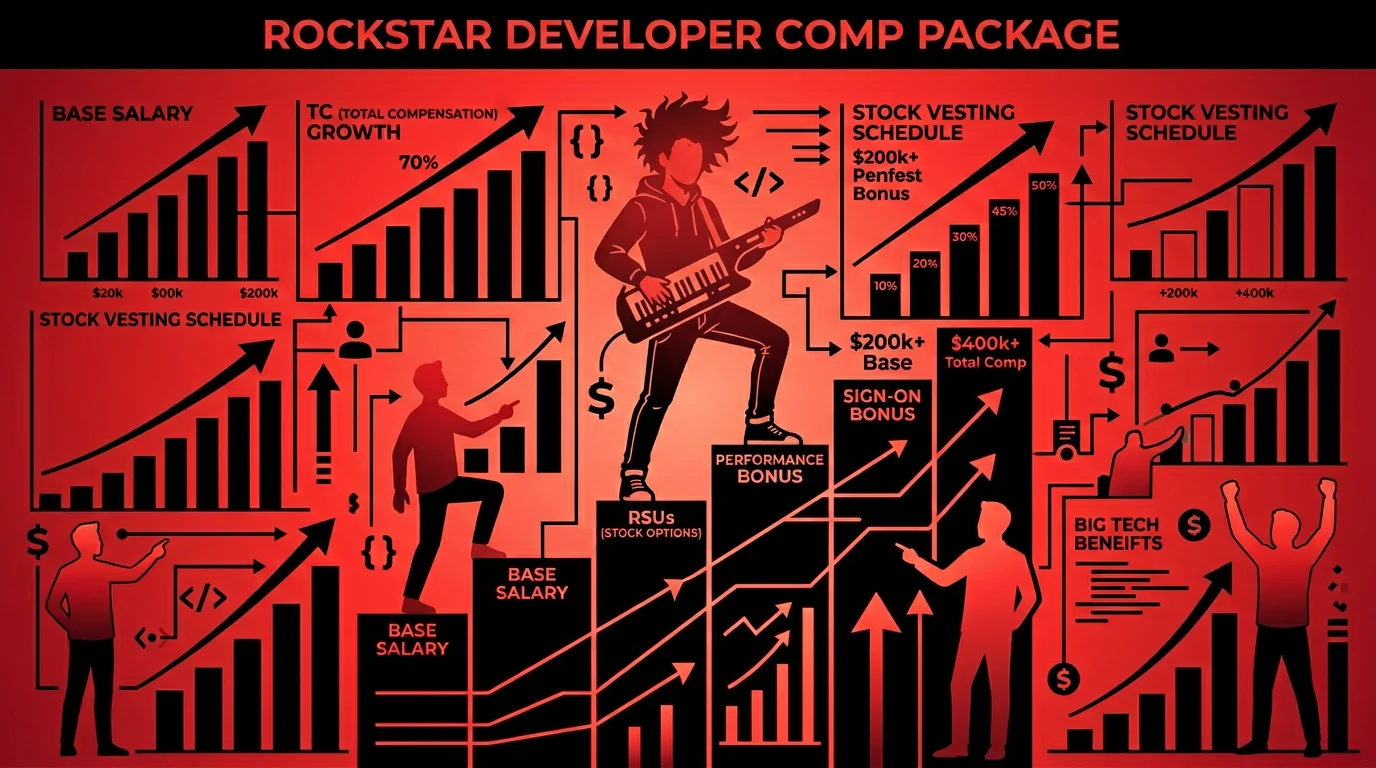
Amazon's compensation structure is one of the most confusing in all of FAANG. You'll see an SDE I role advertised with a pay range of $185K in total comp, but then hear stories about senior engineers pulling in $400K or more. Both are accurate, and the gap has everything to do with how Amazon structures its compensation packages, especially around stock.
I'm John Sonmez, founder of Simple Programmer and author of Soft Skills: The Software Developer's Life Manual. I've spent years helping software developers understand and negotiate their salary offers. And Amazon is the company where negotiation matters most, because their backloaded vesting schedule means your real compensation data looks wildly different in Year 1 versus Year 4. If you don't understand how Amazon pay works, you'll leave a lot of money on the table.
Let me walk you through what a software engineer at Amazon actually earns at each SDE level, how the compensation bands work, and how to negotiate a better software engineer offer.
1. How Much Does an Amazon Software Engineer Make?
According to data from Levels.fyi, Glassdoor, and Bureau of Labor Statistics salary reports, the average Amazon software engineer salary in the United States falls somewhere between $150,000 and $180,000 in base salary. But that number barely tells the story. Amazon's total compensation includes base salary, stock (RSU grants), a signing bonus, and performance bonuses. When you calculate the full package, the median yearly compensation for an SDE at Amazon ranges from roughly $185K for an L4 to over $800,000 for an L7.
Here's what most people miss: Amazon has salary caps that have historically been lower than other big tech companies. For years, base salary was capped at around $160,000. Amazon recently raised that cap significantly, but stock still makes up the bulk of total comp for senior engineers. This means your compensation package varies dramatically depending on when Amazon stock was granted and what the stock price was at the time.
According to salary data from Glassdoor, Levels.fyi, and Blind, Amazon software engineer salaries consistently rank in the upper tier of FAANG companies, though the structure makes direct comparison tricky.
2. Amazon Software Engineer Levels Explained
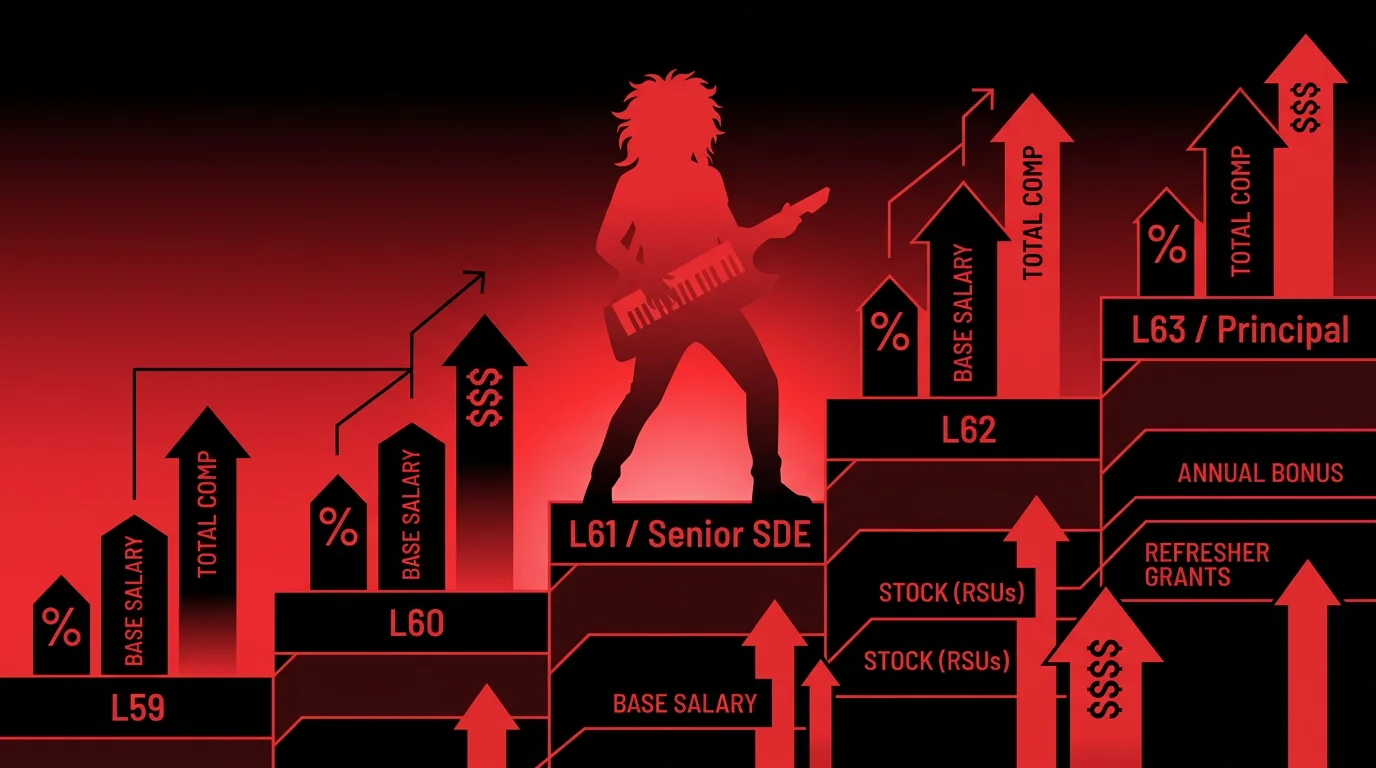
Amazon uses SDE levels that map to internal ladder levels. Understanding where you fall in this range is critical for knowing your pay bands and career trajectory. Here's the breakdown:
L4 (SDE I): Entry-level and new grad position. Total comp ranges from $185K to $230,000 annually. Base salary typically sits between $120,000 and $160,000. Amazon supplements the lower Year 1 and Year 2 equity vesting with a generous signing bonus spread across the first two years. Most junior developers start here.
L5 (SDE II): Mid-level developer role. This is where most engineers settle after 2-4 years. Total compensation ranges from $250,000 to $400,000. An Amazon L5 can expect base salary around $160,000 to $185,000 plus significant RSU grants. The software engineer compensation at this level varies significantly by location, with Seattle typically paying 10-15% more than other locations.
L6 (SDE III / Senior SDE): Senior engineers who own large technical areas. Total comp ranges from $350,000 to $600,000+. Amazon ranges for L6 can be wide because stock refreshers and performance rating directly affect your total comp. Senior engineers at this level drive architectural decisions across teams.
L7 (Principal SDE): Principal-level engineers who set technical direction across organizations. Total compensation can reach $600,000 to $1,000,000+ annually. Getting to L7 requires exceptional scope and impact. This is a rare level, with a promotion rate that's notoriously low.
3. Amazon's Unique Vesting Schedule
This is the single most important thing to understand about Amazon salary structure. Unlike Google, Meta, or Microsoft, which vest stock evenly over four years (25% per year), Amazon uses a heavily backloaded vesting schedule: 5% in Year 1, 15% in Year 2, 40% in Year 3, and 40% in Year 4.
What does this mean in practice? Your first two years at Amazon, you earn substantially less in total comp than your overall package would suggest. To compensate, Amazon gives large signing bonuses in Years 1 and 2 to bring your total comp closer to the target. But even with the signing bonus, many engineers find their Year 1 and Year 2 pay disappointing.
The good news? Years 3 and 4 are where Amazon stock really kicks in. If the stock price has gone up since your grant, your total comp in those years can exceed your original offer significantly. On the flip side, if the stock price drops, you'll feel it directly in your paycheck. This is why understanding your vest schedule matters so much when evaluating an Amazon offer.
An Amazon offer is a ceiling someone else sets, and now that AI makes raw coding cheap, being one more resume on the pile only makes it harder to lift. The asset that keeps climbing is a name people already trust. The free Rockstar Engineer Blueprint shows you how to build it and stop being a number on a pay band.
Get the Free Course4. How Amazon Pay Compares to Other FAANG Companies
Let me give you a straight comparison. For a mid-level software engineer (L5/SDE II equivalent), here's roughly what you can expect in total compensation across big tech:
Amazon typically offers $280,000 to $380,000. Google offers $300,000 to $420,000. Meta tends to come in at $310,000 to $440,000. Microsoft usually ranges from $250,000 to $370,000. Apple falls somewhere between $270,000 and $400,000.
Amazon often appears lower on paper, but the backloaded vesting schedule means your Year 3 and Year 4 compensation can surge past competitors. The catch is you have to stick around long enough to see those shares vest. This is by design. Amazon uses compensation structure as a retention tool.
Also worth noting: Amazon's culture is famously intense. The performance review system uses a stack ranking approach where your rating directly impacts stock refreshers and promotion decisions. A top performer can see their salary grow rapidly through stock refresh grants, while an average performer might see very little beyond their initial package.
5. How to Negotiate Your Amazon Software Engineer Salary
Amazon is one of the most negotiable FAANG companies, and here's why: their Amazon recruiter will often present an initial offer that has plenty of room to move. The key areas to negotiate are signing bonus, stock grants, and level. Base salary is harder to move because of the salary caps, but the other components are very flexible.
First, always come in with a competing offer from Google, Meta, or another top tech company. This gives you real data to share when pushing for more. Amazon's compensation data shows they regularly match or beat competing offers, especially for strong candidates.
Second, negotiate on stock. RSU grants are where the big money lives at Amazon. If you can push your initial stock grant up by even $50K, that compounds significantly over four years as those shares vest and potentially appreciate.
Third, consider negotiating your level. Coming in as an L5 versus L4 represents a massive difference in the overall package and sets a much higher baseline for future raises. If you have the experience to justify it, push hard here.
My biggest piece of advice? Never accept the first offer. Amazon expects you to negotiate. They build room into every offer specifically for this purpose. If you want the full playbook, read our developer salary negotiation guide for scripts and strategies that work.
6. Why Your Personal Brand Affects Your Amazon Salary
Here's something most salary articles skip over. The candidate who gets reached out to by an Amazon recruiter because of their GitHub contributions, blog posts, or conference talks is in a completely different negotiating position than someone who cold-applies through the careers page.
When you have a reputation, you don't have to prove yourself as hard during the interview process. The hiring team already knows your work. That means your offer comes in higher from the start, and you have more room to negotiate upward.
I've watched developers earn $30,000 to $50K more per year just because they had an established presence that made Amazon come to them. Building your personal brand isn't just a nice-to-have. It's a compensation strategy.
Getting recruited beats cold-applying, and that gap only widens now that AI makes raw coding skill cheap. The best engineers stop chasing offers because their industry already knows their name. The free 5-day Rockstar Engineer Blueprint shows you how to get there.
Get the Free Course7. Taking Action
If you're targeting Amazon, start by understanding the vesting schedule inside and out. Know that your Year 1 total comp will be lower than what you might get at Google or Meta for the same role. Factor that into your decision. Then, research current Amazon software engineer salaries at your target level using Levels.fyi and Glassdoor. Get at least one competing offer before you negotiate. Practice your negotiation scripts. And start building your online presence now so that when the time comes, you're the one getting recruited, not the one applying. That's how you earn at the top of the range.
If you're serious about earning at the top of the range, John's The Complete Software Developer's Career Guide is the natural next step.
Explore more on