Quick summary
Level-by-level compensation from SDE to Principal, with negotiation advice
If you're wondering what a software engineer at Microsoft actually takes home, you're not alone. Microsoft is one of the top tech companies in the world, and their compensation data gets searched thousands of times every month. The numbers you'll find on sites like Glassdoor and Levels.fyi range from $160,000 to over $1,000,000 in yearly total compensation. Both ends are real. The difference comes down to your level.
I'm John Sonmez, founder of Simple Programmer and author of Soft Skills: The Software Developer's Life Manual.
I've coached hundreds of software developers through job offers and salary negotiations over the years. And one thing I can tell you is that Microsoft's comp structure is more straightforward than most people think. Once you understand their internal leveling system, the pay bands, and how each component of the package works, you can make smart decisions about your career and your money.
Let me walk you through exactly what a Microsoft software engineer earns at every level, how compensation is structured, and how to negotiate a higher software engineer offer at Microsoft when you get one.
1. How Much Does a Microsoft Software Engineer Make?
The average Microsoft software engineer base salary in the United States falls between $130,000 and $180,000 depending on the level and location. But base salary is only one component of Microsoft's total compensation package. When you add stock grants, performance bonus payouts, and benefits, the total pay range stretches much higher.
According to salary data reported at Microsoft on Levels.fyi and Blind, the median total compensation for a mid-level Microsoft software engineer sits around $219K to $300,000 per year. Senior software engineer roles earn well above that, and principal-level engineers can clear $500,000 or more yearly.
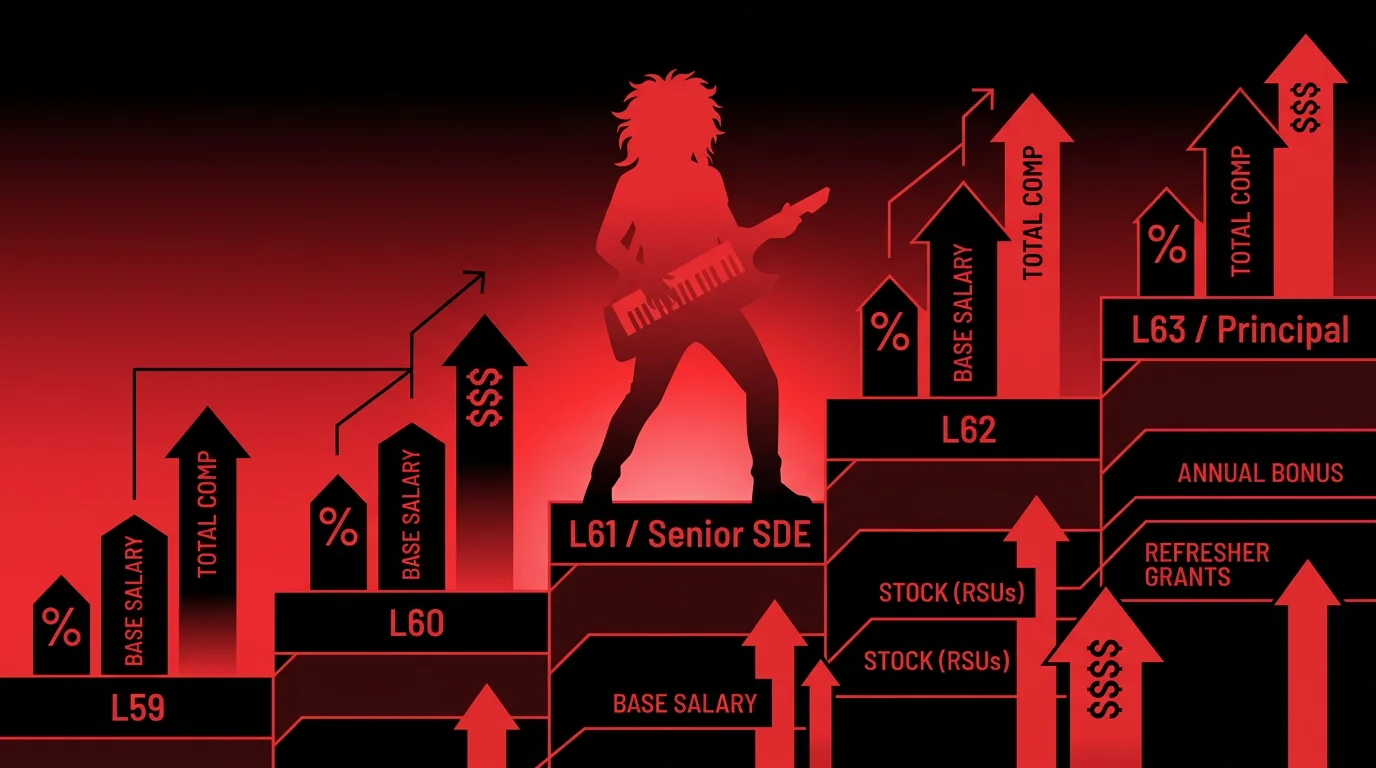
Here's what matters most. Microsoft uses a numeric leveling system that runs from 59 to 70. Your level determines your salary band, your stock grant range, your bonus target as a percentage of base, and your scope of responsibility.
2. Microsoft Software Engineer Levels: Senior Software Engineer to Principal Salary Breakdown
Microsoft's leveling system is one of the most transparent in big tech once you know how it works. Here's how the levels break down for each engineer role:
Level 59-60 (SDE / Software Development Engineer): This is the entry-level position for new grads and early-career developers. Total compensation ranges from $160,000 per year for 59 up to $210,000 for level 60. Base salary typically sits between $110,000 and $140,000.
Level 61-62 (SDE II): Mid-level engineers who can work independently. Total compensation ranges from $200,000 to $320,000. Base salary moves up to $140,000 to $175,000. Engineers typically spend 2 to 4 years at these levels before promotion.
Level 63-64 (Senior SDE): Senior software engineers who lead projects and mentor others. Total compensation ranges from $280,000 to $450,000. Base salary at this level can reach $185,000 to $220,000.
Level 65-66 (Principal SDE): Principal software engineers who drive technical direction across multiple teams. Total compensation ranges from $400,000 to $700,000+. Stock grants can exceed $100,000 per year, and bonus targets hit 20-30% of base.
Level 67+ (Partner / Distinguished Engineer): These are the rarest roles at Microsoft. Total compensation can reach $800,000 to $1,200,000 or more. Fewer than 1% of Microsoft employees in software engineering ever reach this level.
The engineer who gets recruited into Level 63 out-earns the one who cold-applied by tens of thousands. The difference is a name Microsoft already knows. Our free Rockstar Engineer Blueprint shows you how to build that reputation, so the recruiters come to you.
Get the Free Course3. Base Salary vs. Total Compensation at Microsoft
This is where most people get confused, and it's the most important thing to understand about Microsoft pay.
Your base salary is just one component of your total compensation. At Microsoft, a typical package includes four parts: base salary, stock options in the form of RSUs vesting over 4 years in equal quarterly installments, a performance bonus, and benefits. Some offers also include a sign on bonus.
At level 59-60, base salary makes up about 65-70% of total compensation. By level 65-66, base salary might only account for 40-50% of the total, with stock and bonus filling the gap.
Microsoft stock vests over 4 years, but unlike Amazon's notorious backloaded schedule, Microsoft uses equal vesting. You get the same amount every quarter for four years. This makes your compensation more predictable.
Performance bonuses at Microsoft work as a percentage of your base salary, with the target percentage increasing at each level. An SDE might have a 10% bonus target, while a principal SDE could have a 25-30% target.
4. How Microsoft Pay Compares to Other FAANG and Tech Companies
Let's compare Microsoft to the other big names. For a senior engineer (Level 63 at Microsoft, roughly equivalent to Google L5 or Amazon L6):
Microsoft typically offers $280,000 to $450,000. Google comes in at $350,000 to $550,000. Meta ranges from $350,000 to $580,000. Amazon pays $350,000 to $600,000, though years 1 and 2 are lower due to backloaded vesting.
So who pays more, Google or Microsoft? In most cases, Google pays higher total compensation at equivalent levels. A Google L5 senior engineer generally out-earns a Microsoft Level 63 by $50,000 to $100,000 per year.
That said, Microsoft offers something you can't put a dollar amount on: work life balance. Microsoft has a reputation for being one of the more sustainable places to build a long career in big tech.
5. How to Negotiate Your Microsoft Software Engineer Offer
Here's where most developers leave money on the table. And I don't say that lightly. I've worked with developers who added $30,000 to $50K or more to their total compensation just by having the right negotiation.
The first thing to understand: Microsoft recruiters expect you to negotiate. They build room into every offer. If you accept the first number they give you, you're almost certainly leaving money behind.
My advice? Get at least one competing option from another top company before you sit down to negotiate your offer at Microsoft. A competing offer gives you real market data and positioning power.
Focus your negotiation on three areas. First, push on stock. RSU grants are the most flexible component of a Microsoft offer, and they compound over 4 years. Second, negotiate your level. Coming in at Level 63 versus 62 sets a fundamentally different trajectory. Third, ask for a sign on bonus.
Never name a number first. Let the recruiter make the initial offer, then counter with data.
6. Why Your Personal Brand Affects Your Microsoft Salary
This is the part most salary articles skip, but it might be the most important section on this page.
When a Microsoft recruiter reaches out to you because they saw your blog, your open source work, or your conference talk, you're in a completely different negotiating position than someone who cold-applied through the careers page. The person with the greatest need always has the disadvantage. If Microsoft needs you more than you need them, you'll earn at the top of the range.
I've watched this play out hundreds of times. Two engineers with the same experience and skills get offers from Microsoft. One applied cold. The other was recruited because of a strong online presence. The recruited engineer gets a higher level, more stock, and a bigger signing bonus. The difference can be $50K or more per year in total pay.
Building your personal brand isn't a nice-to-have. It's a compensation strategy.
Stacking more certs won't move you up Microsoft's pay bands. Becoming the developer your industry knows by name will. Get our free 5-day course and start.
Get the Free Course7. Taking Action
If you're targeting a job at Microsoft, here's what to do right now. First, research current Microsoft software engineer salary data at your target level using Levels.fyi and Glassdoor. Know exactly what the pay band and range is before you interview. Second, prepare for the interview process. Microsoft's interviews test coding, system design, and behavioral skills.
Third, get competing offers. Apply to Google, Amazon, Meta, and other tech companies at the same time. Competing offers are the single most powerful tool you have when it comes time to negotiate.
Fourth, start building your online presence today. Don't wait until you're job hunting. The developers who earn the most at Microsoft are the ones who were recruited, not the ones who applied. A blog, GitHub contributions, or a YouTube channel covering technical topics can shift your negotiating position entirely.
The difference between accepting the first offer and negotiating well can be worth more than $100,000 over just a few years. Over a long career? You're talking about hundreds of thousands of dollars. Do the work now.
Explore more on