Quick summary
Stop bouncing between tutorials. This month-by-month software engineer roadmap shows you exactly what to learn, when to learn it, and how to get hired as a developer in 2026.
So you want to become a software engineer. Great. But where do you actually start?
I'm John Sonmez, founder of Simple Programmer and author of Soft Skills: The Software Developer's Life Manual. I've spent over two decades writing code professionally. I've hired developers, mentored them, and watched them struggle with the same question you're probably asking right now: what exactly should I learn, and in what order?
The problem isn't a lack of information. The problem is too much of it. There are thousands of YouTube tutorials, coding bootcamps promising six-figure salaries in six months, and random people on Reddit arguing about whether you should learn Python or JavaScript first. It's overwhelming.
This software engineer roadmap cuts through that noise. I'm going to show you exactly what to learn, when to learn it, and how to actually get hired as a developer in 2026. Follow this roadmap to become a working software developer.
1. What is a Software Engineer Roadmap?
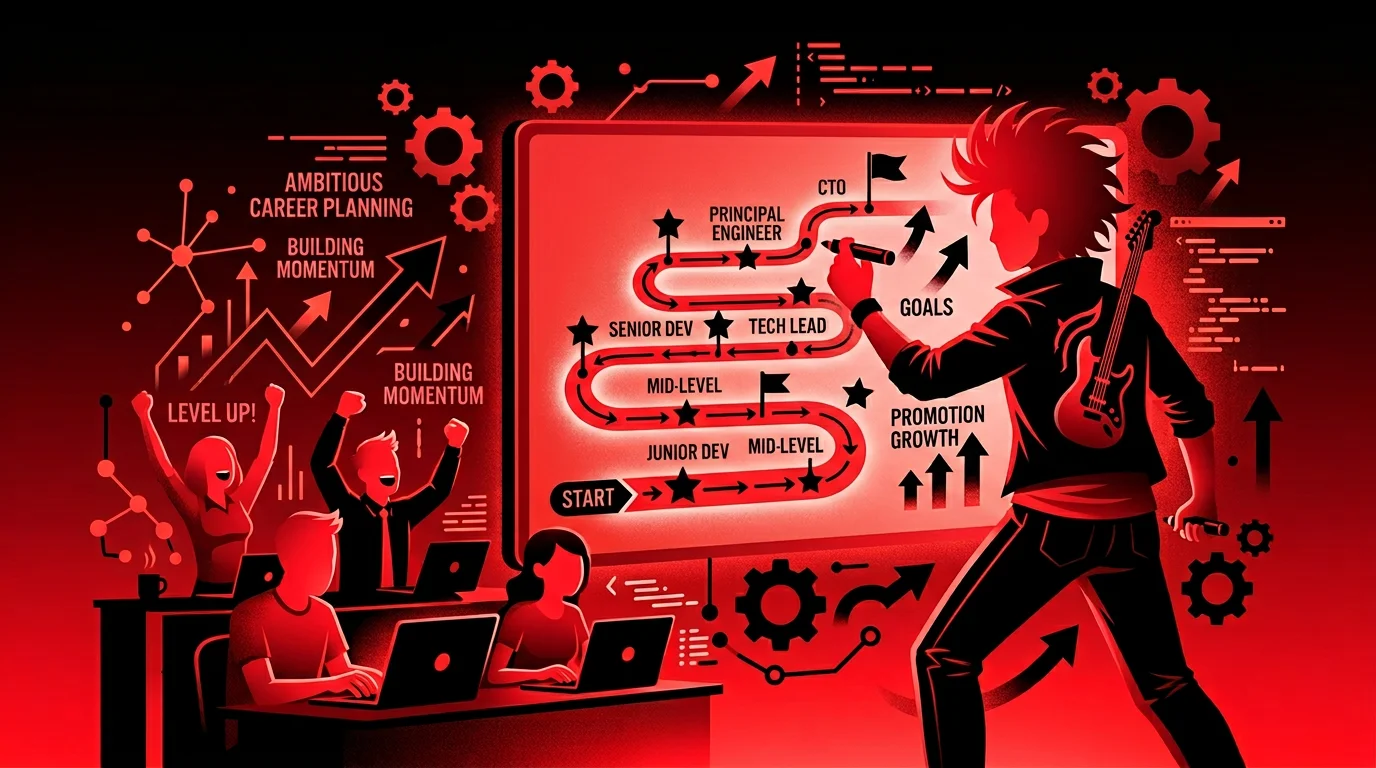
A software engineer roadmap is simply a learning plan. It tells you what skills you need to build, what order to build them in, and what you can skip. Think of it like a skill tree in a video game. You don't unlock everything at once. You pick a path and work through it systematically.
The biggest mistake beginners make is trying to learn everything simultaneously. They bounce between HTML, Python, machine learning, and Kubernetes in the same week. They watch tutorials but never build anything. A year later, they know a little about a lot but can't actually create working software.
A good roadmap prevents that. It gives you focus.
2. The Skills You Need to Become a Software Engineer: Data Structures, Algorithms, and More
Let me break down what you actually need to know. Not everything, but the fundamentals that matter for getting hired and doing real work.
First, you need at least one programming language. Python or JavaScript are the best choices for beginners in 2026. Python has cleaner syntax and dominates in data science, machine learning, and backend development. JavaScript runs in browsers and is essential for web development. Either works. Pick one and stick with it for at least six months before touching another language.
Second, learn data structures and algorithms. This sounds scarier than it is. You need to understand arrays, linked lists, hash tables, trees, and graphs. You need to know basic algorithms like sorting and searching. These concepts show up in every coding interview and help you write efficient code. Don't skip this thinking it's only "computer science theory." It's not. It's practical knowledge that separates amateur coders from professional developers.
Third, understand how the web works. Even if you don't want to become a web developer, you should know HTTP, APIs, databases, and client-server architecture. Most software development jobs involve building or maintaining web applications. The fundamentals here apply everywhere.
Fourth, learn version control with Git. Every development team uses Git to track code changes. GitHub is where developers collaborate and where employers look at your work. If you don't have a GitHub profile with actual projects, you're invisible to hiring managers.
Fifth, get comfortable with at least one framework. React or Next.js for frontend. Django or Flask for Python backend. Express for JavaScript backend. Frameworks make you productive faster and are what companies actually use in production.
3. Choosing Your Software Engineer Career Path
Software development isn't one job. It's dozens of different specializations. You don't need to pick immediately, but understanding the options helps you focus your learning.
Frontend developers build what users see. They work with HTML, CSS, JavaScript, and frameworks like React. If you enjoy visual design and user experience, frontend might be your path. The work involves making interfaces that look good, with proper responsiveness across all devices.
Backend developers build what users don't see. They work with servers, databases, APIs, and business logic. If you like solving complex problems and don't care about visual design, backend is probably a better fit. Python, Java, and JavaScript (with Node.js) are common backend languages.
Full-stack developers do both. They can build an entire web application from start to finish, handling everything from the user interface to the database. This is valuable but takes longer to learn well. Most beginners should start with either frontend or backend, then expand later.
DevOps engineers focus on deployment, infrastructure, and automation. They work with cloud services like AWS, containerization with Docker, and continuous integration pipelines. This is a growing field, but I wouldn't recommend it as a starting point. Learn to code first, then consider DevOps.
Data engineers and machine learning engineers work with data at scale. They build pipelines, train AI models, and create systems that process massive amounts of information. Python dominates here. If math and statistics interest you, this path pays extremely well.
Security engineers and cybersecurity specialists protect systems from attacks. Every company needs security, and the demand far exceeds supply. This tech career path requires understanding both offensive and defensive techniques, but it builds on the same programming fundamentals.
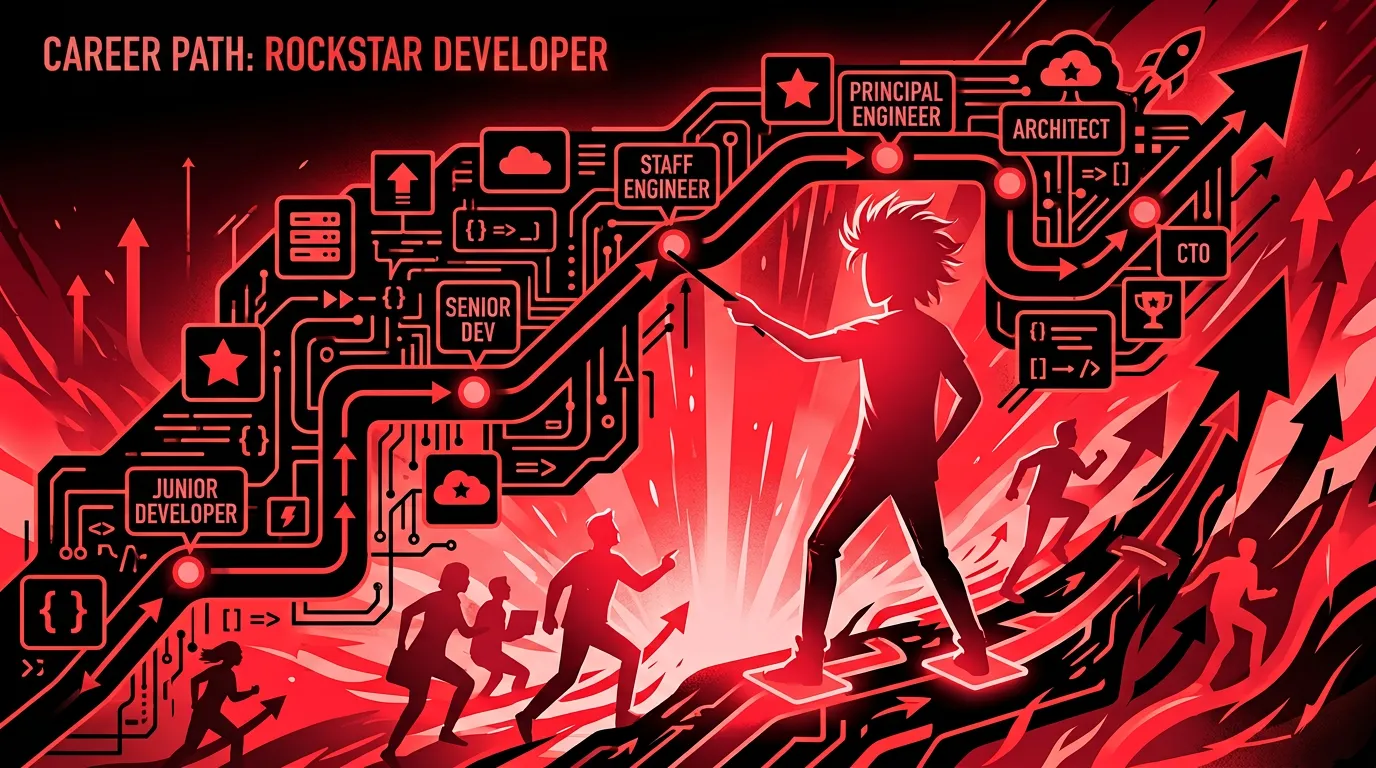
A roadmap teaches you the skills. It won't make anyone know your name. As AI makes raw coding cheap, the developer who gets hired is the one people already recognize. The free Rockstar Engineer Blueprint from John Sonmez shows you how to become known, so the best jobs and offers come looking for you.
Get the Free Course4. How AI is Changing the Software Engineer Roadmap in 2026
Let's talk about AI. You can't ignore it anymore.
AI coding assistants like GitHub Copilot and Claude are now standard tools in professional software development. They can write boilerplate code, explain errors, and even generate entire functions from descriptions. Some people claim AI will replace software engineers. I don't buy it.
What AI does change is the value of certain skills. Memorizing syntax matters less when AI can write it for you. Problem-solving, system design, and understanding what to build matter more. Using AI effectively is itself becoming a required skill.
My advice: learn AI tools early. Don't treat them as cheating. Professional developers use AI daily to work faster. The goal isn't to avoid AI, it's to become better at directing it. AI can write code, but it can't understand requirements, make architectural decisions, or debug complex systems. Those skills are still yours to develop.
AI also creates new job categories. Companies need engineers who can build AI features into applications. They need people who understand large language models, prompt engineering, and AI integration. Simple AI features like chatbots, recommendation systems, and content generation are showing up in almost every application. Learning how to implement these gives you an edge.
The developers who struggle in an AI world are the ones who only learned to copy and paste code from Stack Overflow. If you actually understand what you're building and why, AI becomes a multiplier, not a threat.
5. The Roadmap: Month by Month
Here's a realistic timeline for going from zero coding knowledge to job-ready software developer. This assumes you can dedicate 15-20 hours per week to learning. If you have more time, you can move faster. If you have less, it will take longer.
Months 1-2: Programming Fundamentals
Pick Python or JavaScript. Learn variables, functions, loops, conditionals, and basic data types. Don't just watch tutorials. Write code every single day, even if it's just for 30 minutes. Build small programs that solve problems you actually have. A tip calculator. A password generator. A simple game. The projects don't need to be impressive. You're building the muscle memory of coding. The learning experience comes from doing, not watching.
Resources that actually work: freeCodeCamp for JavaScript, Codecademy for Python. Both are free platforms with structured, beginner-friendly educational content to keep you on track.
Months 3-4: Data Structures and Algorithms
This is where many self-taught developers skip ahead and regret it later. Spend serious time understanding how data structures work, not just how to use them. Implement a linked list from scratch. Write sorting algorithms by hand. It feels tedious, but this knowledge compounds.
Practice coding problems on LeetCode or HackerRank. Start with easy problems and work up. Don't worry about solving them fast initially. Focus on understanding the patterns.
Months 5-6: Web Development Fundamentals
Learn HTML and CSS. Understand how browsers work. Build a personal website without any framework. Then learn JavaScript for the browser (DOM manipulation, events, fetch API). This gives you the foundation for any web developer role and helps backend developers understand what frontend teams need.
Months 7-8: Framework and Backend
If you went the JavaScript route, learn React for frontend or Express for backend. If you chose Python, learn Django or Flask. Build a complete project with a database. A todo app, a blog, or a simple e-commerce site. Deploy it to a real server using a cloud service like Vercel, Render, or AWS. Learning to deploy early makes a huge difference.
SQL is mandatory here. Learn to create tables, write queries, and understand database relationships. Every developer job requires database knowledge.
Months 9-10: System Design, AI Tools, and Professional Skills
Start thinking about scalability. How would your application handle 10,000 users? What about a million? You need to build scalable systems. Learn about caching with tools like Redis, load balancing, and microservices at a conceptual level. These complex topics don't need full implementation yet, but you need to speak intelligently about system design in senior developer interviews.
This is also when you should master AI coding tools. Learn to use AI assistants like GitHub Copilot effectively. Practice prompting AI to generate boilerplate code, write tests, and explain unfamiliar codebases. The developers who integrate AI into their workflow ship faster than those who don't. AI won't replace you, but a developer using AI will outperform one who refuses to learn it.
Also focus on code quality and best practices. Learn to write tests. Understand TypeScript if you're in the JavaScript ecosystem. Practice code review with other developers. Following industry best practices separates professionals from hobbyists.
Months 11-12: Portfolio and Job Search
Build 2-3 substantial projects that demonstrate your skills. Put them on GitHub with good README files. Create a portfolio website. Update your LinkedIn. Start applying to entry-level software engineering jobs.
Prepare for technical interviews. Practice data structure problems. Be ready to explain your projects in detail. Soft skills matter too. If you can communicate clearly and work on a team, you're already ahead of many candidates.
6. Coding Bootcamp vs. Self-Taught vs. College Degree for Software Engineers
The question everyone asks: do I need a college degree to become a software engineer?
No. A college degree helps with certain companies, but plenty of developers land great jobs without one.
Some large tech companies still filter resumes by education. Many startups and mid-size companies don't care at all. What matters is whether you can actually build software and pass their interviews.
A coding bootcamp can compress this roadmap into 3-6 months of intensive learning. Good bootcamps provide structured learning, mentorship, and job placement assistance. Bad bootcamps take your money and teach you to copy tutorial projects. Research thoroughly before enrolling. Look for bootcamps with transparent job placement rates, quality educational content, and income share agreements.
Self-taught developers succeed all the time. The challenge is maintaining discipline and knowing what to learn next. A roadmap like this one helps, but you're still responsible for holding yourself accountable. Many people start learning alone, get discouraged, and quit. If that describes you, a bootcamp's structure might be worth the cost.
A computer science degree takes 4 years and covers theory that bootcamps skip. It's overkill for many developer jobs but valuable if you want to work on compilers, operating systems, or cutting-edge AI research. For most web development, mobile, and enterprise software roles, you don't need it. The tech industry has changed dramatically since 2024, with more companies dropping degree requirements entirely.
7. Getting Hired as a Software Developer
The job search is its own skill. Technical ability gets you interviews. Interview performance gets you offers.
First, understand what entry-level software engineering jobs actually look like. You won't be building AI systems at Google on day one. Junior developer jobs involve fixing bugs, implementing features from specifications, writing tests, and learning the existing codebase. Companies hiring beginners want people who can learn quickly and work well with a team.
Second, your GitHub profile matters more than your resume. Hiring managers want to see that you can actually code. Platforms like GitHub show your real work. Three completed projects with clean code and documentation beats a list of technologies you claim to know. A strong portfolio will get you hired faster than any certification.
Third, technical interviews test data structures, algorithms, and problem-solving. Practice coding problems until you can solve medium-difficulty problems consistently. Understand common patterns. Be able to explain your thinking out loud while you code.
Fourth, networking works. Attend local meetups. Contribute to open-source projects. Engage with developers on Twitter or in Discord communities. Many developer jobs come through referrals, not job boards.
Fifth, apply broadly but tailor your applications. Generic cover letters go in the trash. Show that you've researched the company and understand their product. Explain specifically how your skills match what they need.
8. Common Mistakes to Avoid
I've seen thousands of aspiring software developers make the same mistakes. Don't be one of them.
Tutorial hell is real. Watching coding videos isn't the same as coding. You feel like you're learning, but you're not building the problem-solving skills that actually matter. After completing a tutorial, immediately try to build something similar without looking at the solution. That's where real learning happens.
Don't chase every new technology. New frameworks and tools come out constantly. You don't need to learn all of them. Master fundamentals first. A developer who deeply understands JavaScript can pick up any new framework in a week. A developer who only knows React syntax struggles the moment something changes.
Don't wait until you feel ready to apply for jobs. You'll never feel ready. Imposter syndrome is universal in this industry. Apply when you have basic skills and a couple of projects. The worst thing that happens is you don't get the job and learn what you need to improve.
Don't neglect soft skills. Many developers focus entirely on technical learning and forget that software development is a team sport. Communication, collaboration, and the ability to receive feedback gracefully matter enormously for your career progression from junior to senior developer and beyond.
This roadmap gets you your first job. Getting the best jobs after that is a different game. When AI takes over the routine work, the offers go to developers people already know by name. Get the free 5-day Rockstar Engineer Blueprint and learn how to become that developer.
Get the Free Course9. Taking Action
You've read the roadmap. Now what? Here's the actionable part.
Today, pick your first programming language. Python or JavaScript. Not both. Write down why you chose it so you remember when the temptation to switch hits.
This week, complete the first module of a beginner coding course. freeCodeCamp and Codecademy are free and good enough to start. Don't overthink this choice. Just start.
This month, build your first small project. It doesn't matter if it's ugly or simple. A working program you built yourself teaches more than twenty tutorials you watched.
In three months, revisit this roadmap. Are you on track? What's the next skill you need to develop? Adjust your plan based on what you've learned about yourself and the job market.
The software engineer career path isn't easy. But it's one of the few careers where you can go from complete beginner to well-paid professional in under two years without a degree. People do it every day. Many who started their first job in 2025 are now senior developers.
The developers who succeed aren't necessarily the smartest. They're the ones who show up consistently, build real projects, and don't quit when things get hard.
Stop researching. Start coding. Your roadmap is right here.
Explore more on