
Quick summary
The real salary data, the skills that matter, and the fastest path into a role companies are scrambling to fill before the title gets as crowded as 'AI engineer' did.
Every job board I checked this week had the same new title stapled onto postings that used to just say 'AI Engineer' or 'Automation Engineer': AI Automation Engineer. The pay bands are all over the map, from about $86,000 on ZipRecruiter's low end to $170,000 at Glassdoor's 75th percentile, and the job descriptions read like three different jobs duct-taped together.
Search 'automation engineer jobs' or 'ai automation jobs' and you'll find the same req wearing a different name. That's what happens when a hiring market moves faster than HR can write a clean job description.
I've watched this exact pattern before. A company figures out it needs someone who can take an LLM, wire it into an actual business process, and make it run without babysitting, and a title gets slapped on the req before anyone's agreed on what the role even covers.
If you're trying to figure out whether this is a real career or just this year's buzzword, and how to actually land one of these jobs, this guide covers both: what the role really is, what it pays according to data I could actually verify, and the moves that get you hired while everyone else is still arguing about the title.
1. What an AI Automation Engineer Actually Does
Strip the hype and an AI automation engineer does one job: apply artificial intelligence to a business process that currently needs a human in the loop, and rebuild it so an AI system can run it reliably, with a human checking the output instead of doing the work.
That's different from a traditional automation engineer, who scripts a fixed sequence of steps that never deviates. It's also different from a pure AI engineer, who might spend a day fine-tuning a model or building a RAG pipeline with no particular business process attached.
The automation engineer's job is the process. The AI is just the tool that finally makes the process flexible enough to handle the exceptions a rigid script couldn't.
In practice, AI workflow automation means living inside orchestration platforms like n8n, Zapier, and Make, wiring large language models from OpenAI, Anthropic, and Google into the workflow, and building the agent logic that decides when the AI should act on its own versus flag a human.
One chunk of the job looks like traditional software engineering and software development: APIs, databases, error handling, monitoring. Another chunk looks like prompt engineering and evaluation, because an automated workflow that occasionally invents a wrong invoice number is worse than no automation at all.
The title sounds new. The work sits at the intersection of two disciplines that have existed for years, which is exactly why the field is filling up fast with people who already know half the job. The hiring demand behind it shows up in real data; see the broader numbers in our AI engineer statistics breakdown.
Where the title overlaps with other jobs
Job titles nearby make the same point from a different angle. Some companies post for an AI automation specialist, others want an automation engineer with AI capabilities bolted on, and a few still call the opening a machine learning engineer role even though the day-to-day looks more like integration work than model research.
Ignore the label. The job is the same everywhere: find the automation opportunities, build the integration, and make sure it holds up in a production environment with real users hitting it.
Companies integrating AI into their operations will say 'AI tools' in one sentence and 'AI solutions' in the next and mean the same thing, which might be a generative AI model, an AI platform that handles orchestration, or AI capabilities bolted onto the CRM the sales team already lives in.
An AI developer shipping a customer-facing AI application and an AI automation engineer wiring up an internal workflow end up doing a lot of the same integration work. And almost every team using AI this way for the first time underestimates how much harder it is to build AI workflows that survive messy real data than it is to demo AI models in a sandbox.
2. A Day in the Life of an AI Automation Engineer
Most mornings start with checking what broke overnight, because automated workflows fail without making any noise. An API changed its response format, a model started returning malformed JSON, a rate limit got hit at 3 a.m., and somebody has to notice before a customer does.
That monitoring work almost never shows up in the job posting, and it eats a bigger chunk of the week than most people expect going in. The rest of the time, the good ones are hunting for the next automation opportunity before anybody asks them to.

Past that, the building work splits into a few buckets. Mapping an existing manual process, how support actually triages a ticket, how finance actually reconciles an invoice, before writing a line of code, because automating a broken process just makes it fail faster.
Building and testing the agent or workflow itself, usually in a tool like n8n or a custom Python service calling an LLM API. Writing evaluation sets so you can tell whether a prompt change made things better or made them worse without anyone noticing.
And translating results back to the business stakeholders who asked for the automation in the first place, since a good chunk of this job is explaining in plain language why the AI did what it did.
The underlying data is rarely clean, either. Pulling records out of a CRM, parsing unstructured data from a PDF or an email thread, and making sure the automation workflow doesn't choke on the one input nobody tested for: that's where most of the software development time goes.
The glamorous machine learning part, like picking or tuning an ML model, is a small slice of the week.
3. AI Automation Engineer Salary, Backed by Real Numbers
I'd rather get specific than throw out a round number that sounds impressive. According to Glassdoor, the average AI automation engineer in the United States makes about $137,500 a year in total pay, with the middle of the range running from $112,230 at the 25th percentile to $170,182 at the 75th.
ZipRecruiter, which leans on job postings instead, lands lower. Its September 2026 data puts the national average at $107,126, with most salaries between $86,500 and $123,500 and the 90th percentile at $142,500.
Why the numbers don't agree
Why the gap? This one title covers everyone from a junior engineer gluing two APIs together to a senior person running agentic systems across an entire company, and the pay follows that spread.
Location moves it too. ZipRecruiter has Washington state averaging $121,331 and Texas at $99,805 for the same title.
Remote roles run lower. Glassdoor's remote-filtered page puts the average at $97,500, which it describes as 29% below the national figure, with the highest reported remote salary at $137,500.
Still, if you're negotiating a remote offer, know it going in. A remote employer paying you San Francisco or New York rates is giving you something, and you should treat it that way.
How this compares to plain AI engineer pay
Context matters too, because this title overlaps heavily with plain 'AI Engineer.' Glassdoor's AI engineer page shows median total pay around $146,000, and Levels.fyi, which skews toward big tech and folds in stock and bonus, puts the median AI engineer package at $159,430, with the 90th percentile at $300,000.
Company size and equity structure move your number more than the job title does. A mid-size logistics company hiring its first AI automation engineer and a large tech company building internal agent tooling aren't paying from the same budget, even for near-identical job descriptions.
Every AI automation engineer job posting lists the same five tools. That's exactly why skill alone won't get you picked out of the pile. The free Rockstar Engineer Blueprint is a 5-day email course from John Sonmez on getting known in your field, so hiring managers find you before you ever apply.
Get the Free Course4. The AI Automation Skills That Actually Get You Hired
Set aside the skills list that shows up in every posting (Python, APIs, cloud, LLMs) for a second, because that list is table stakes. Every applicant in the pile has it. Here's what I'd actually focus on.
- Python, still. For building custom integrations and handling logic an off-the-shelf automation tool can't.
- At least one orchestration platform. n8n, Zapier, or Make, because that's where most of these workflows actually live day to day. Employers would rather train you on their specific stack than train you on the concept of workflow automation from scratch.
- Agent framework familiarity. LangChain or something similar, since multi-step agentic workflows built around AI agents are quickly becoming the default.
- Evaluation discipline. The unglamorous skill of actually measuring whether your automation got better or worse after a change, which almost nobody picks up in a bootcamp and almost every senior role requires.
- Business fluency. Map a process before you automate it, because the engineers who get promoted fastest in this field are the ones who can sit in a room with finance or support and figure out what's actually broken.
You don't need to integrate every automation tool on the market. Compare automation tools by what the companies you want to work for already run on, and ignore whatever's trending on YouTube this month.
Skip the stuff that sounds impressive but rarely shows up in real requirements: training machine learning models from scratch in TensorFlow, custom fine-tuning infrastructure, research-grade math. Unless you're targeting a model lab specifically, that's effort spent on the wrong 20%.
The problem-solving that actually gets rewarded here is narrower and more practical than generative AI research: can you take a messy automation project, deploy it, and keep it working once real data hits it.
5. The Tools and Technologies You'll Actually Touch
Beyond the big three orchestration platforms, the stack keeps getting wider. On the infrastructure side you've got cloud platforms like AWS, Azure, and Google Cloud for hosting workflows, Docker for containerizing services, and CI/CD pipelines so you can push updates to production without breaking what's already running.
On the AI side there are vector databases for retrieval-augmented generation, agent frameworks like LangChain and AutoGen for coordinating multiple LLM calls into one workflow, and API access to models from OpenAI, Anthropic, and Google.
Then there's the process side: process mining tools that show how a workflow really runs before anyone tries to automate it, and observability tooling that flags when a model's output quality slips once it's live in production environments.
Most of the newer automation platforms also ship with AI integration built in, so a growing share of the job is deciding which AI platforms and automation frameworks you trust with agentic AI work, and which ones you keep far away from anything a customer sees.
All of it has to be scalable. A workflow that handles ten invoices a day can fall over at ten thousand, so scalability matters as much as whether the thing works the first time.
And nothing worth automating gets deployed once and left alone. It gets monitored, patched, and redeployed every time the business changes underneath it.
Known in the industry as hyperautomation
Outside of job postings, the industry calls this intelligent automation or hyperautomation: RPA, AI, and process mining combined so whole workflows run with minimal human intervention. It's one more chapter of the digital transformation push companies have been funding for years, and the money is real.
A workflow that handles ten invoices a day can fall over at ten thousand, so scalability matters as much as whether the thing works the first time.
Fortune Business Insights values the business process automation market at $19.85 billion in 2025 and projects $56.68 billion by 2034. Zapier is private and doesn't publish revenue, but the research firm Sacra estimated it at about $310 million in annual recurring revenue at the end of 2023.
And YipitData's B2B spend panel found that nearly 80% of n8n's new customers over the past year were already paying for Zapier. None of that spending turns into working systems without engineers who can wire this stack together.
You can learn n8n, LangChain, and prompt evaluation in three months. So can thousands of other developers watching the same tutorials right now. The free 5-day Rockstar Engineer Blueprint shows you the one move almost nobody makes: building a reputation so the automation jobs come find you.
Get the Free Course6. How to Break In, Step by Step
If you're starting from a general software engineering background, here's the order I'd actually run this in.
Step 1: Pick one orchestration tool and go deep. n8n if you want the developer-friendly, self-hostable option that, according to YipitData's B2B spend data, is taking share from Zapier. Zapier if you want the tool more non-technical teams already use, and you want to be the person who can bridge both worlds.
Step 2: Pick something with real stakes. A workflow that triages your own inbox is a demo. A workflow that automates an actual process for a local business, a nonprofit, or a freelance client, with real data and real failure modes, is a portfolio piece.
A handful of real automation projects beats a long list of frameworks on a resume, and any decent hiring manager can spot demo work in about thirty seconds.
Step 3: Add the AI layer on top of a working automation. Take a rule-based workflow you already built and replace the rigid logic with an LLM call that handles the exceptions.
That before-and-after story, showing what broke on the edge cases and how adding a model fixed it, is exactly what gets you through a technical interview.
Step 4: Learn the full stack this role touches, from applied AI engineering fundamentals like RAG and vector databases, through to the testing discipline that test automation engineers have been running for a decade, because AI automation inherits the same 'how do you know it actually works' problem that discipline already solved for traditional software.
Step 5: Get your name in front of the people hiring for this. A resume sitting in an applicant tracking system rarely does that on its own. More on that in a minute, because it's the step almost everyone skips and the one that actually works.
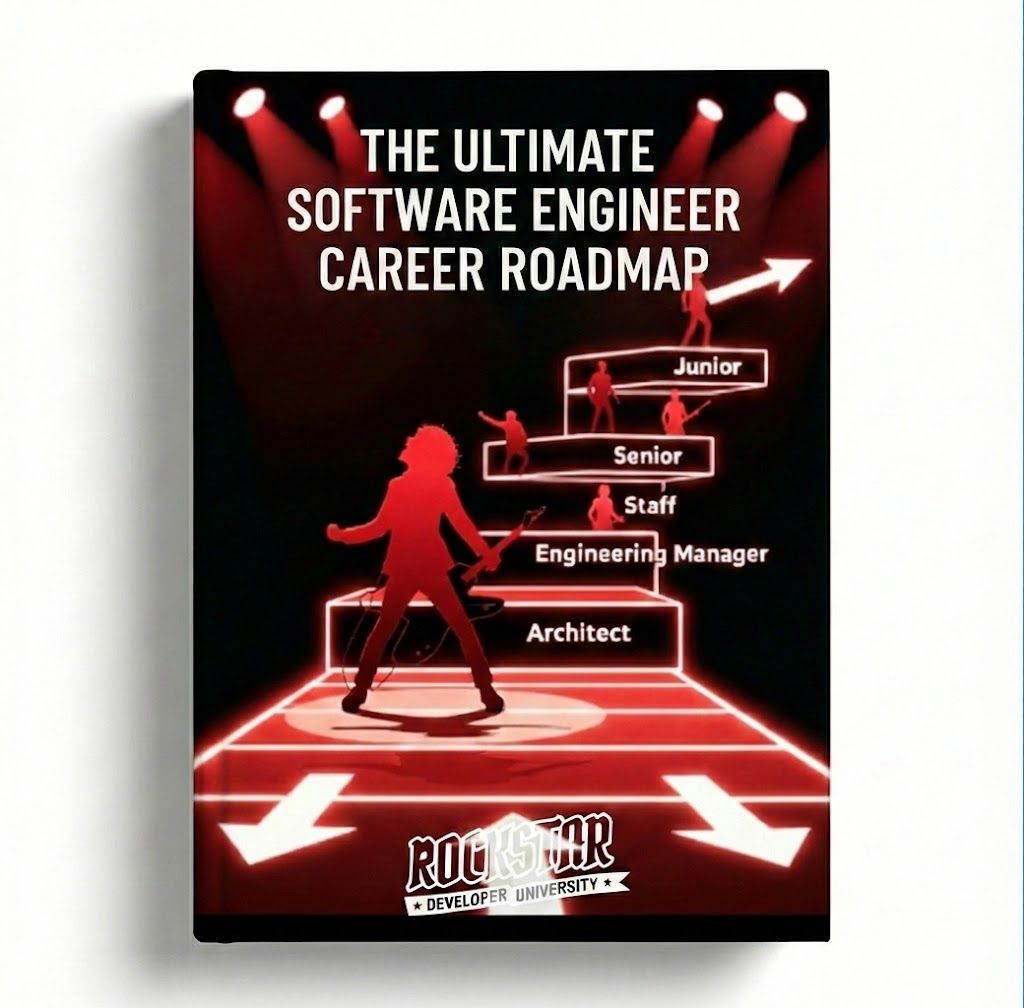
7. The Career Path and What Each Level Pays
The path tends to run through four rough tiers. Junior or associate AI automation engineers, usually 0 to 2 years in, build and maintain existing workflows under supervision, and that's where ZipRecruiter's $86,500 to $123,500 band mostly lives.
Mid-level engineers own a whole workflow domain end to end, say all of customer support automation, which is the territory Glassdoor's $112,000 to $170,000 middle range describes. Senior engineers design multi-agent systems, set evaluation standards for the team, and get pulled into architecture decisions.
At the top sits a smaller group of automation architects or staff-level engineers who decide how an entire company adopts agentic workflows.
Glassdoor doesn't have enough AI-specific salaries yet to price those top tiers cleanly, but the general automation engineer career path it shows alongside its remote AI automation data gives you a feel for the climb: about $131,000 to $195,000 for a senior automation engineer and $137,000 to $209,000 for an automation engineering manager.
- Level 1Junior / associate AI automation engineer
- Level 2Mid-level AI automation engineer
- Level 3Senior automation engineer
- Level 4Automation engineering manager
What actually moves you up a level
Moving from mid to senior rarely comes down to writing better code. It comes down to trust, meaning whether the business will let your workflow touch something that matters, like financial transactions or customer-facing decisions, without a human checking every output.
Earning that trust is a reputation problem as much as a technical one. Career advancement past senior almost never comes from a certificate. It comes from a track record of automation systems that didn't fall over, and from people knowing about that track record.
8. How This Compares to the Adjacent Titles
A plain AI engineer, the kind covered in our AI engineer career path, spends more time inside the model layer itself: RAG design, prompt engineering, model evaluation, without necessarily owning one specific business process end to end.
An AI automation engineer usually sits one layer up, closer to the business workflow, and treats the model as one component in a bigger system rather than the whole job.
An RPA developer, the classic 'robotic process automation' title from the UiPath and Automation Anywhere era, is the closest historical ancestor of this role, except RPA bots follow rigid, scripted steps and break the moment a screen layout changes.
AI automation engineers are often the people brought in specifically to replace brittle RPA bots with AI-driven business automation that can handle variation. If you already have an RPA background, you're closer to this role than you think.
Test automation is an underrated way in
A test automation engineer solves a related but distinct problem: proving that software behaves correctly, repeatedly, at scale. That discipline, writing evaluation suites, catching regressions, measuring failure rates, maps almost directly onto the 'how do I know my agent didn't just get worse' problem that AI automation engineers run into constantly.
It's one of the more underrated crossover paths into this field.
Then there's the AI consultant route, where instead of automating workflows inside one company as an employee, you do it across many companies as an independent. Same core skill. Different business model, usually with a much higher ceiling once you have a track record to point to.
| Role | Where it focuses |
|---|---|
| AI automation engineer | Owns a business workflow end to end; the model is one component |
| AI engineer | Works inside the model layer: RAG design, prompt engineering, model evaluation |
| RPA developer | Follows rigid, scripted steps; breaks the moment a screen layout changes |
| Test automation engineer | Proves software behaves correctly, repeatedly, at scale |
| AI consultant | Same skill, applied across many companies instead of one |
9. The Part Nobody Puts in the Job Posting
Every hot new title in software follows the same arc. The title gets attention, a flood of engineers retrain for it fast, and within a year or two the applicant pool looks like every other crowded title before it.
Same frameworks on every resume. Same two portfolio projects everyone built from the same tutorial. 'Prompt Engineer' went through this. 'AI Automation Engineer' is going through it right now, with near-duplicate postings everywhere and a wave of candidates who all learned n8n from the same YouTube series.
Browse what's actually open right now, across titles and seniority tiers, at AI engineer jobs.
Why skill alone stops working
Skill gets you through the first resume screen, and that's about all it does when every other resume on the posting lists the same five tools you do. What gets you picked is being the person a hiring manager already knows before the req even opens, because you wrote about the automation you built, posted the before-and-after numbers, or showed up in the communities where the people doing the hiring hang out.
I've seen this play out for my entire career: in a crowded market, the engineer who's known beats the engineer who's merely skilled almost every time. I wrote a whole book, Soft Skills, largely about that idea, and it's even more true now that AI makes technical skill cheaper to acquire.
Skill gets you through the first resume screen, and that's about all it does when every other resume on the posting lists the same five tools you do.
Keep doing the technical work. Just stop treating 'get good' as the whole plan.
Explore more on