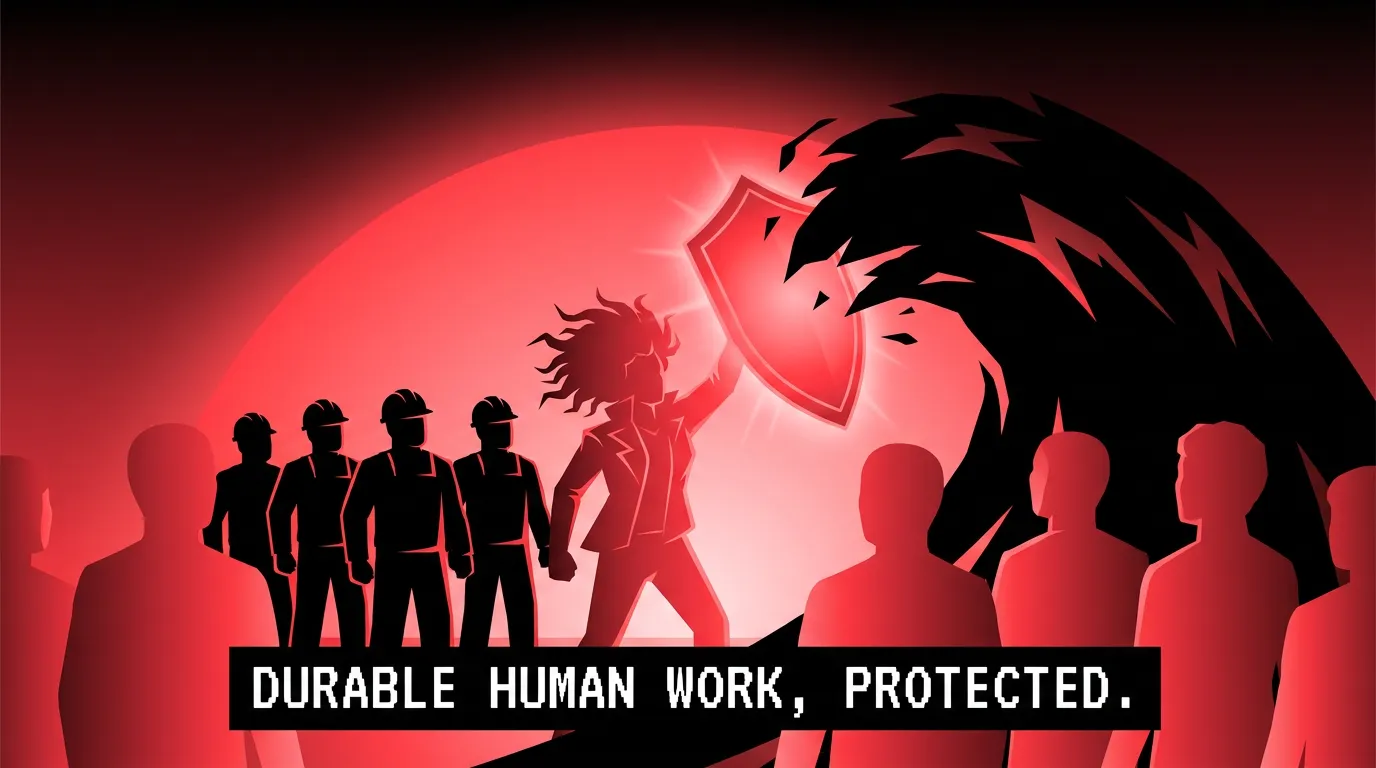
I'm John Sonmez, and I'll be blunt. You're searching for jobs that AI can't replace, and almost everyone is going to hand you a list. Plumber. Nurse. Electrician. Therapist. Pat you on the head and tell you to go learn welding. I'm not going to do that, because the premise is broken. There is no AI-proof job. There's only AI-proof work, and that distinction is the difference between a career that survives the next decade and one that gets routed around.
Here's the honest version nobody on page one of Google will give you. AI doesn't replace occupations. It replaces tasks. McKinsey estimates up to 30% of US work hours could be automated by 2030 once you account for generative AI, jumping from 21.5% to 29.5% (McKinsey, 2023). But that same report does not forecast mass unemployment. Tasks get eaten. Jobs get reshaped. And the part of any role that survives is the same four things every time, whether you're a surgeon or a software developer.
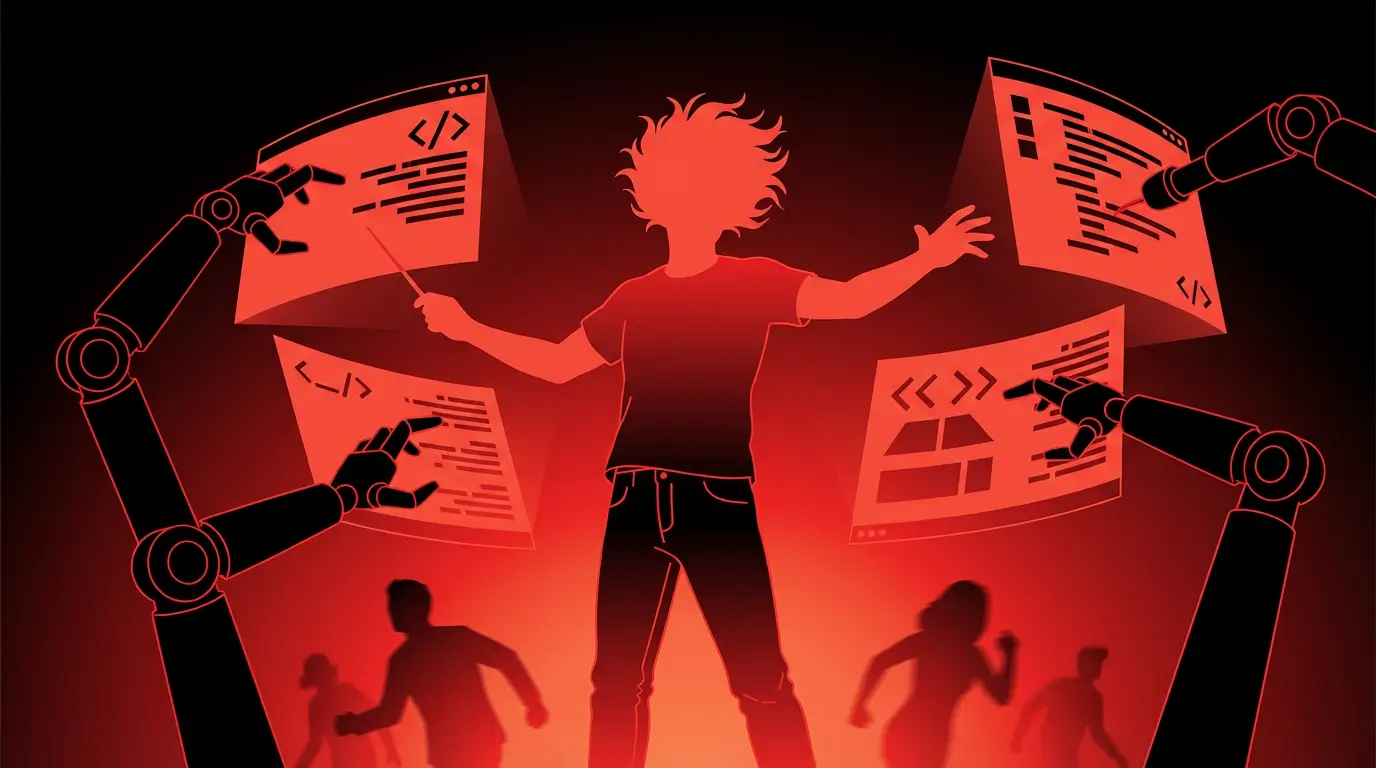
So if you're a developer reading this hoping I'll tell you to flee software, I won't. The smart move isn't running to a trade. It's climbing the stack toward the work AI can't do alone and becoming the person who directs the machine instead of the one it replaces. That's the whole thesis of the AI engineer career path, and by the end of this you'll understand why it beats every job on those safe-careers listicles.
1. There Is No AI-Proof Job (And Why That Framing Will Hurt You)
Let's kill the premise first, because chasing an "AI-proof job" will lead you straight into a bad decision. "AI-proof" does not mean AI never touches the work. It means AI can't replace the entire role end to end. Every job loses tasks. The question is whether what's left is something a human still has to do.
Even the jobs everyone calls safe are losing pieces. A nurse uses AI to summarize charts. An electrician uses an app that diagnoses faults. A teacher uses AI to grade quizzes. The task gets automated. The role doesn't disappear, because the core of the role was never the task that got eaten.
And here's the caveat the listicles conveniently skip: academic research keeps finding that AI-exposure models are lousy predictors of which occupations actually lose employment. Exposure is not destiny. A job can be highly exposed and still grow. A job can look safe and still shrink for reasons that have nothing to do with AI. So stop asking "what job is safe?" It's the wrong question and it has no useful answer. Ask instead: "what part of any job survives?" That version you can actually plan a career around.
2. The Four Traits That Actually Make Work Durable
Across every credible study I've read, durable work comes down to four traits. Memorize these, because they matter more than any job title on a list.
First, hands-on physical work in unpredictable settings. A half-built structure. A leaking pipe behind a wall. An emergency scene where nothing is where the manual says it should be. No dataset prepares a model for the specific chaos of a real job site, and no robot economically handles billions of unique homes and rigs.
Second, human trust and emotional connection earned in real time. Reading a pause. Catching the thing someone isn't saying. The non-verbal cues and context an AI simply can't perceive sitting on the other side of a screen.
Third, accountability someone has to legally and morally own. A surgeon signs the chart. A judge signs the ruling. A CEO faces the room when it all goes sideways. When the cost of being wrong lands on a person, companies keep a person in the loop on purpose.
Fourth, novel judgment under incomplete information. The call that isn't in the training data. AI can model ten options for you in seconds. It cannot make the decision, and it cannot answer for it. That gap is where careers live or die.
3. What the AI-Exposure Research Actually Says
Most safe-jobs lists wave vaguely at "a McKinsey study" and move on. Let's do better, because the primary research is more interesting and more honest than the summaries.
Start with Anthropic's Economic Index. It maps real, anonymized Claude usage against the Labor Department's O*NET database of more than 900 occupations. That's about as close to ground truth as we have on what people actually use AI for, not what pundits guess. The finding that should reframe your whole search: roughly 30% of workers fall into a near zero-exposure group whose tasks barely show up in AI usage at all (Anthropic, 2025). Cooks. Motorcycle mechanics. Lifeguards. Bartenders. Dishwashers. Physical, in-person work that AI isn't touching today.
Now the part developers won't like. The single most AI-exposed occupation by task coverage is computer programmer, at 75% (Anthropic, 2025). Customer service reps and data entry keyers sit right behind at 67%. The most-exposed work is screen-and-data work, which flips the old assumption on its head. Pew found highly-exposed jobs actually pay more, $33/hr on average versus $20/hr for the least-exposed, and skew college-educated (Pew, 2023). Automation is not just coming for low-wage labor anymore. It's coming for the keyboard.
One more number that matters more than any of them. On Claude, AI usage leaned toward augmentation, 57% of tasks where AI collaborates with a human, versus 43% pure automation (Anthropic, 2025). The dominant pattern isn't replacement. It's a human plus a machine. Which means the winners are the humans who learn to run the machine.
If the exposure research worries you, good, it should change what you do next. AI is making raw coding skill cheap, and when every developer ships the same code, the one who gets the job is the one people know. The free Rockstar Engineer Blueprint is a 5-day course from John Sonmez on becoming the developer your industry knows by name, so the best offers come looking for you.
Get the Free Course4. The Categories That Hold Up: Trades, Care, and the Frontline
If you do want the categories, here they are, with the actual reasons and the actual data, not vibes.
Skilled trades hold up because they stack three durable traits at once. Electricians, plumbers, HVAC techs, welders. Manual dexterity in tight, weird spaces, code-regulated work where someone has to be liable, and on-site problem-solving where every job is a little different. Microsoft Research analyzed 200,000 real Copilot conversations and ranked the least AI-applicable jobs as exactly this kind of work: dredge operators, bridge and lock tenders, water-treatment operators, foundry coremakers, orderlies (Microsoft Research, 2025). Hands-on roles, bottom of the exposure list.
Healthcare and caregiving hold up because they demand empathy, physical presence, and accountability simultaneously. AI reads the scan. A human sits with the scared patient and owns the treatment call. Nurse practitioner employment is projected to grow about 46% from 2023 to 2033, among the fastest-growing occupations in the entire country (BLS, 2024). That's not a job AI is hollowing out. That's a job exploding.
And the broad frontline holds up by sheer volume. The World Economic Forum's Future of Jobs Report 2025 projects the largest absolute job growth in frontline roles: farmworkers, delivery drivers, construction workers, plus care and nursing professionals (WEF, 2025). Meanwhile the fastest-declining roles by percentage are the screen-and-paper jobs: postal clerks down 34%, bank tellers down 31%, data entry clerks down 26% (WEF, 2025). Notice the pattern. The work that vanishes is the work a model can do from a chair.
5. The Knowledge Jobs That Survive (It's the Judgment, Not the Title)
Here's where I disagree with almost every list out there. They tell you to flee knowledge work entirely. That's lazy. Plenty of knowledge jobs survive just fine, but only the parts built on judgment and accountability, not the parts built on analysis.
Leadership, entrepreneurship, and senior management survive on the decision itself. AI can model every scenario you want. It cannot take the risk, and it cannot face the board when the bet goes wrong. Someone has to own the outcome, and that someone gets paid for it.
The honest, uncomfortable truth most lists hide is that protection is narrow even inside "safe" roles. Take an HR manager. The policy-writing, the data analysis, the report generation? Automatable. The coalition-building, the crisis leadership, the hard conversation in a closed room? Not even close. The job survives only to the degree the person protects the unautomatable half and lets AI eat the rest. Same for marketing, finance, law, you name it.
Creative direction beats creative execution every time. AI is a phenomenal remixer of patterns it has already seen. It does not set cultural direction or choose the bold, counter-cultural bet on purpose. And skilled judgment roles in law, medicine, and security keep humans in the loop precisely because the cost of being wrong is borne by a person, not a model. The title is never the protection. The judgment is.
6. The Developer Question: Is Software a Job AI Can Replace?
This is the question that actually brought most of you here, so let's hit it straight. Programming is the single most AI-exposed occupation by task coverage. So is software finished? No. But it's splitting in half, and which half you're standing on decides everything.
The data refuses to fit a clean narrative, which is exactly why I trust it. The BLS projects software developer employment to grow 15% from 2024 to 2034, far above the 3% all-occupation average, with roughly 129,200 openings a year and a 2024 median pay of $133,080 (BLS, 2025). Growing fast. But in the very same handbook, BLS projects computer programmer employment to decline 6% over the same period as companies automate repetitive coding (BLS, 2025). Two tech titles, opposite directions. That's the job-versus-task split in one chart. The narrow, repetitive coder shrinks. The developer who owns systems grows.
The pain is real, and it's concentrated at the bottom. SignalFire found entry-level hiring at the 15 biggest tech firms fell 25% from 2023 to 2024, and more than 50% since 2019, with new grads now just 7% of hires (SignalFire, 2025). The bottom rung of the ladder got sawed off. That's the disruption everyone feels.
But here's the kicker that tells you where the durable work went. Developers themselves don't trust the machine to own the work. Stack Overflow's 2025 survey found 84% of developers use AI tools, yet only 3% highly trust the output, and the number-one frustration, hitting 66% of them, is code that's "almost right, but not quite" (Stack Overflow, 2025). Think about what that means. AI floods the world with almost-right output, and the scarce, paid human is the one who can tell what's actually correct and put their name on it.
The developers winning this stop competing with a model on raw output. AI is making that output cheap, so the raise goes to the developer people already know by name. The free 5-day Rockstar Engineer Blueprint from John Sonmez walks you through exactly how to get known, so the best jobs, raises, and offers come to you.
Get the Free Course7. Build What AI Can't: The Meta-Lesson for Developers
So put it together. Don't quit software to learn welding. That's panic, not strategy. The durable work has four traits, and you don't have to leave your field to get them. You have to climb toward them inside software.
The winning posture is to direct AI, not compete with it on raw output. You will lose a typing contest with a model. You will not lose a judgment contest, an accountability contest, or a "can you talk to the human and own the outcome" contest. The augmentation data backs this up: the jobs aren't disappearing, they're becoming human-plus-machine, and the human running the machine gets the raise.
So build accountability into your role on purpose. Ship things you put your name on. Own a system end to end, not a ticket. Become the person stakeholders trust when the AI output is almost right and someone has to decide. Talk to humans, make the calls, carry the consequence. That's the unautomatable half, and you protect it the same way an HR manager protects coalition-building or a surgeon protects the cut.
The cleanest version of this for a developer is the AI engineer. It's the role that builds and directs the systems instead of feeding them tickets. You sit on the side of the lever AI hands you, not under it. If you want the concrete map for getting there, that's exactly what the AI engineer career path lays out, step by step, from where you are now to the engineer companies can't route around.
8. How to Future-Proof Yourself Without Quitting Your Field
Forget the safe-jobs list. Here's what to actually do, and it works whether you're a developer, a marketer, or an accountant.
Audit your own role against the exposure data. Take an honest inventory: which of your daily tasks sit in the high-coverage bucket that AI eats, and which sit in the zero-exposure bucket of judgment, trust, and presence? Then deliberately move your weight toward the second pile. Hand the first pile to the machine before someone hands it for you.
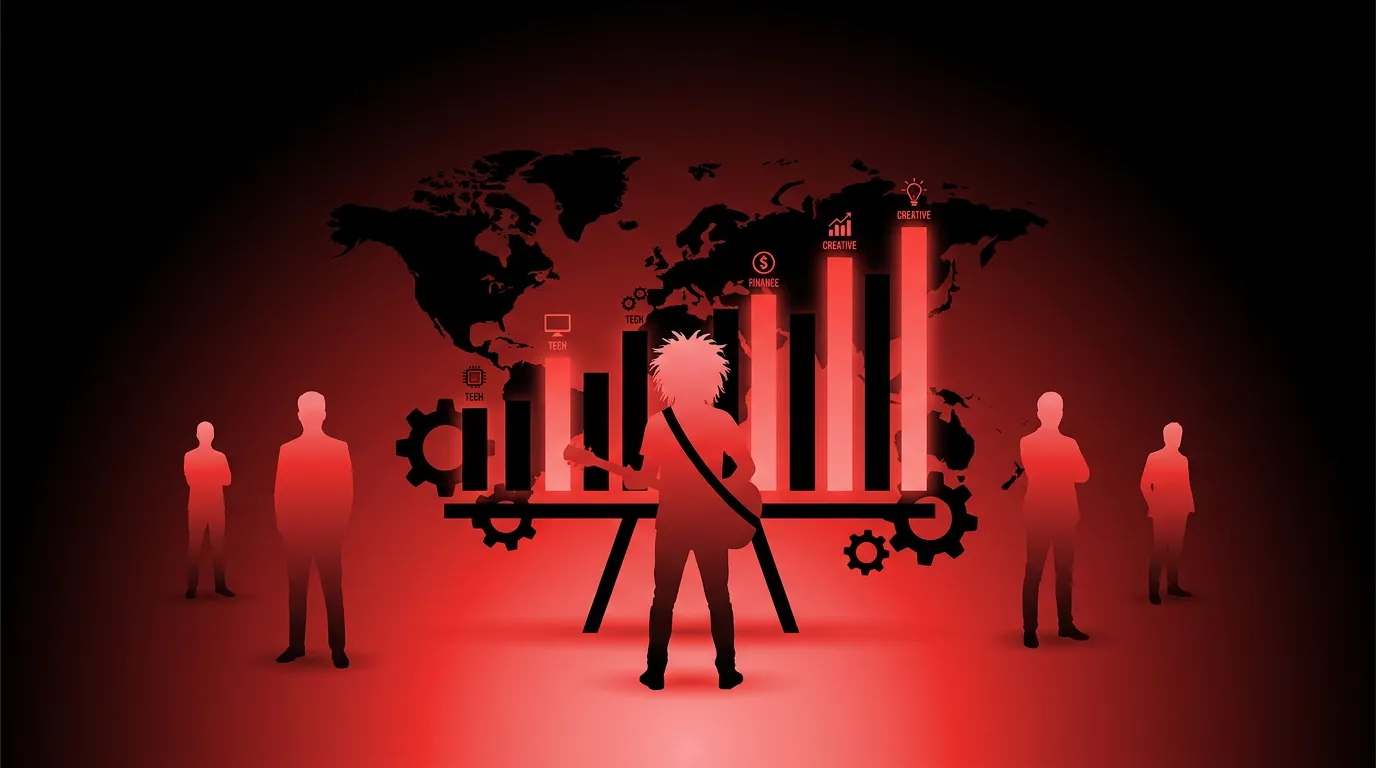
Stack a human skill on top of a technical one. The WEF's most-demanded skills for 2030 aren't "AI literacy" alone. They're analytical thinking, resilience and flexibility, and AI literacy together (WEF, 2025). Not one or the other. The technical skill gets you in the door. The human skill is what keeps the door from being automated shut behind you.
Become the verifier and the decider. As AI floods every industry with almost-right output, the rare and valuable human is the one who can judge what's actually correct and own that call. That's not a soft skill. It's the whole game now. And treat reskilling as continuous, not a one-time fix. WEF projects 39% of workers' core skills will be transformed or outdated by 2030 (WEF, 2025). The durable career was never a fixed title that happened to be "safe." It's a learning loop, and the people who run that loop are the ones AI can't replace.