Quick summary
Trump renamed AI to Super Intelligence by executive order. Here's the real difference between that rename and the decades-old idea of superintelligence.
Right now 'super intelligence' means two completely different things depending on who's saying it, and almost nobody stops to say which one they mean.
If you heard Trump signed an executive order 'replacing AI with super intelligence' and also remember reading about superintelligence as this hypothetical, far-future AI that worries safety researchers, you're not confused, you're just noticing that two unrelated ideas now share a name.
One is a branding decision. The other is a thirty-year-old thought experiment that hasn't happened, and that frontier labs openly admit they haven't built.
Getting the difference straight matters for your career, your resume, and honestly for understanding what's actually going on in Washington right now.
If you want the practical side of this for your job title and your next move, read super intelligence engineer after you finish here.
1. Super Intelligence Now Means Two Different Things
The executive order's meaning
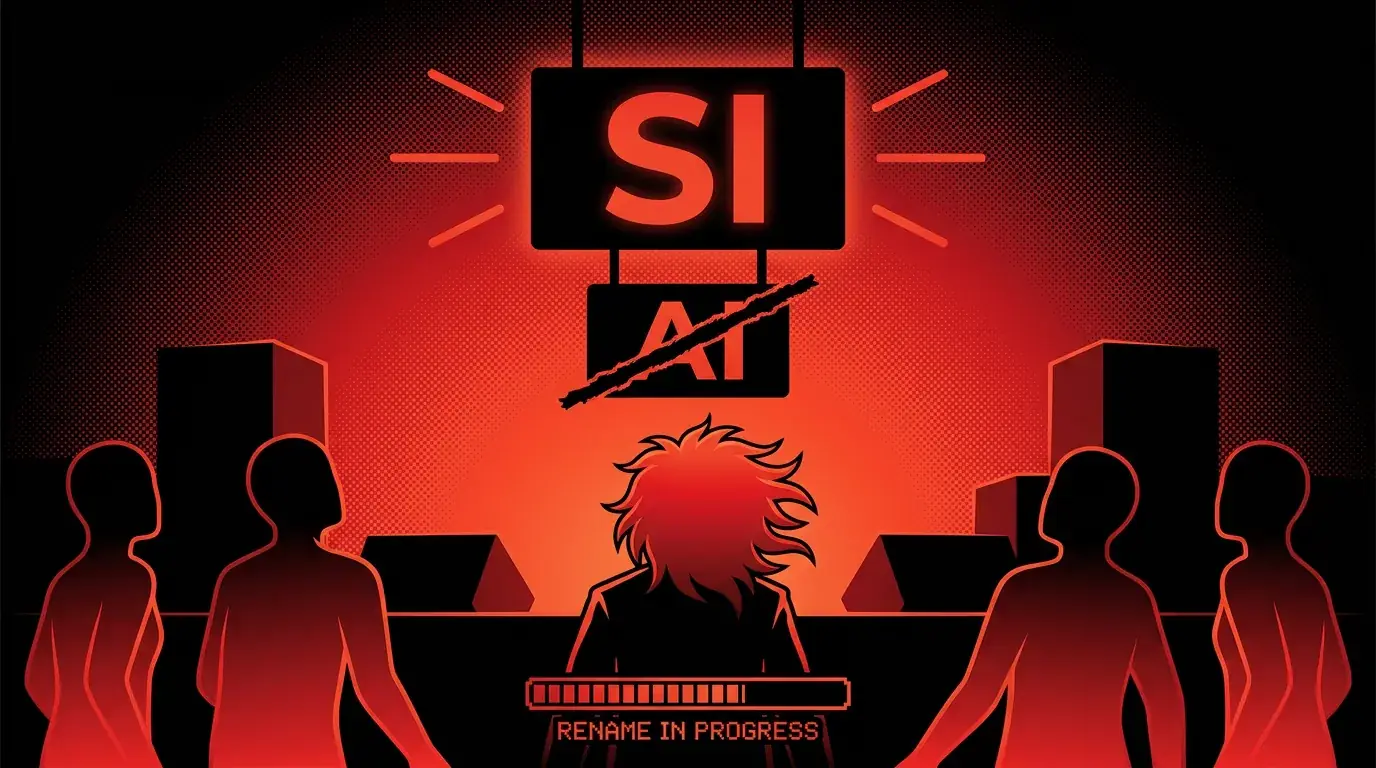
On September 29, 2026, President Trump signed an executive order titled 'Inaugurating the Era of Super Intelligence,' directing every federal department and agency to stop using 'artificial intelligence' and 'AI' in official communications, websites, reports, and policy documents, and use 'Super Intelligence' and 'SI' instead.
He'd previewed the move a week earlier at the UN General Assembly, telling the room the word 'artificial' was 'a fake word' and that the technology deserved something more accurate.
Crucially, the order itself says 'Super Intelligence' currently means the exact same thing as the existing legal definition of 'artificial intelligence' in federal law, Section 9401(3) of Title 15 of the US Code.
Legally, nothing changed except the label.
Bostrom's meaning
Meaning two is much older and much more specific. Philosopher Nick Bostrom defined superintelligence in his 2014 book 'Superintelligence: Paths, Dangers, Strategies' as any intellect that greatly exceeds the cognitive performance of humans in virtually all domains of interest.
This is the concept AI safety researchers have debated for over a decade: not a chatbot that writes good code, but a system smarter than the best human minds at everything, the way humans are smarter than earthworms.
Nothing meeting that definition exists. Not GPT, not Claude, not Gemini, not any frontier model from any lab, including the six companies that stood next to Trump at the White House that same week.
2. What the Executive Order Actually Does, and Doesn't Do
The order is narrower than the headlines made it sound. It only governs executive branch communications going forward: official correspondence, public communications, agency websites, reports, and non-statutory policy documents.
It explicitly does not touch previously issued regulations, existing contracts, or historical documents, and it creates no enforceable right or benefit for anyone.
Michael Kratsios, Trump's science and technology advisor, has 60 days from signing to propose an actual legal definition of 'Super Intelligence' and to recommend whether it should eventually replace the statutory definition of 'artificial intelligence' in federal law. Until that happens, and Congress would likely need to act for it to stick, the statute still says 'AI.'
The accord's four safety layers
The same day, Trump also signed a separate, non-binding document called the White House Accord on Super Intelligence, sometimes subtitled the 'Joint Commitment on Frontier Responsibilities.' Six tech leaders signed it: Meta's Mark Zuckerberg, Google's Sundar Pichai, Anthropic's Dario Amodei, OpenAI's Greg Brockman, Nvidia's Jensen Huang, and Elon Musk representing xAI and SpaceX.
It lays out four voluntary layers of safety controls, but names no auditor, sets no deadline, and creates no enforcement mechanism.
- Internal monitoring
- An internal oversight team
- Independent external auditors
- A board-level safety committee
Trump called it 'almost like a constitution.' House Speaker Mike Johnson called it, more accurately, a voluntary statement of principles.
The fact sheet accompanying the order also name-checks two other initiatives worth knowing if you want the full picture: a multibillion-dollar 'Genesis Mission' aimed at scientific breakthroughs, and a 'National Super Intelligence Policy Framework' the administration unveiled back in March 2026.
Both predate the terminology order itself, which tells you the rename was layered onto policy infrastructure that was already using 'super intelligence' as a working phrase inside the administration, not invented from scratch on September 29.
3. AI vs AGI vs ASI: The Technical Differences That Still Matter
Strip the politics away and there are three separate concepts worth keeping straight. AI, artificial intelligence, is what exists today: large language models and the systems built on top of them, genuinely useful, genuinely limited, trained on data and good at pattern-matching across huge amounts of it.
AGI, artificial general intelligence, is a system that can reason and learn across any cognitive domain the way a human can, driving a car one day and debugging a kernel panic the next, without being purpose-built for either.
AGI doesn't exist yet either, and serious researchers disagree on how close anyone actually is.
Where ASI differs from both
ASI, artificial superintelligence, sits a level above both.
Bostrom's own analogy is the clearest one I've found: the gap between a superintelligence and a human genius is roughly the gap between a human and a worm.
It's not 'really good at chat,' it's categorically beyond human cognition in every domain, including ones humans haven't thought of yet.
That's the concept Sanders and Casar's Ban Artificial Superintelligence Act is actually targeting, a permanent ban on building systems that fit that description, paired with a new federal agency and real penalties for violations.
Notice the irony: the White House is calling today's ordinary AI 'super intelligence' in federal paperwork, while Congress is simultaneously debating whether to ban actual superintelligence by roughly the same name.
That's not a contradiction so much as two different institutions using one word for two unrelated things, and it's going to cause real confusion in law, contracts, and job postings for years.
| Term | What it means | Exists today? |
|---|---|---|
| AI | Large language models and the systems built on top of them, trained on data and good at pattern-matching across huge amounts of it. | Yes |
| AGI | A system that can reason and learn across any cognitive domain the way a human can. | Not yet |
| ASI | An intellect that greatly exceeds the cognitive performance of humans in virtually all domains of interest. | No |
Knowing the difference between AI, AGI, and ASI makes you sound sharp in a meeting, but it won't get you hired by itself. The free 5-day Rockstar Engineer Blueprint from John Sonmez shows you how to turn real AI skills into a reputation that gets you recruited, no matter what the job posting calls the technology.
Get the Free Course4. Why Jensen Huang and Mark Zuckerberg Didn't Wait for Trump
Here's what tells you this is mostly a branding play. Meta renamed its internal AI research division 'Meta Superintelligence Labs' back in June 2025, more than a year before the executive order existed, led by Alexandr Wang as chief AI officer.
Nvidia's Jensen Huang has gone further since, calling data centers themselves 'super intelligence factories' and posting that the term 'offers an extraordinary opportunity to advance discovery, productivity, security, health, and prosperity.'
“[The term] offers an extraordinary opportunity to advance discovery, productivity, security, health, and prosperity.”
— Jensen Huang, Nvidia
These companies were circling the word before it had any political backing, because 'super intelligence' simply sounds bigger and less tainted than 'AI' does after a couple of rough years of public opinion.
Why the timing lines up with public opinion
Public opinion is a big part of the timing. Axios reported the rebrand as an attempt to shed AI's 'toxic branding' amid backlash over data center construction, job anxiety among younger workers, and ongoing warnings from AI safety researchers about real risk.
CNBC noted the move landed as Trump's own polling on AI was sinking, weeks ahead of the November 3 midterms.
None of that is a knock on the technology itself. It's a reminder that a rename, timed the way this one was, tells you more about public relations than about any new capability.
5. Not Everyone Is Playing Along
Even among the six companies that stood behind Trump at the signing, there's no actual agreement to call their own products 'super intelligence.' The San Francisco Standard reported that while the accord's title uses the phrase, there's no explicit commitment from any of the labs to adopt the term in their own branding going forward.
Google, Anthropic, and OpenAI were all still talking about 'AI' in their own materials days after the signing.
The companies have a practical reason to show up and nod along anyway: the White House controls contracts and regulatory attention that matter far more to their bottom line than what anyone calls the underlying technology.
Congress's competing bill
The reaction to Congress's competing bill has been just as split. The R Street Institute called the Sanders-Casar Ban Artificial Superintelligence Act 'AI authoritarianism,' arguing its steep penalties and new cabinet-level Department of Artificial Intelligence would be destructive to innovation and competitiveness.
Cognitive scientist Gary Marcus, no cheerleader for unregulated AI, called the bill well-intentioned but said it 'clearly goes too far.'
If you remember nothing else from this article, remember that distinction, because it's the one almost every headline blurs.
None of this is settled. What's actually happening is two branches of the federal government reaching for the same word, 'super intelligence' or 'superintelligence,' to describe opposite things: one side wants to apply it to today's ordinary AI as a press-friendly label, the other wants to ban a hypothetical technology that doesn't exist yet.
If you remember nothing else from this article, remember that distinction, because it's the one almost every headline blurs.
6. What Actually Changes for Developers, and What Doesn't
Nothing changes about the technology, your required skills, or the current job market fundamentals. The statute still defines 'artificial intelligence,' your resume doesn't need rewriting overnight, and no model got smarter the week the order was signed.
What might shift, slowly and unevenly, is vocabulary in specific contexts: federal agency websites and reports going forward, eventually some federal RFP and procurement language as agencies update templates (existing contracts are explicitly exempt), and marketing copy at companies eager to look current.
I cover the practical, resume-and-job-title side of this in depth at super intelligence engineer, including why I couldn't find actual job postings using the literal title yet.
Should you put 'super intelligence' on your resume?
If you're wondering whether to add 'super intelligence' anywhere on your own resume or LinkedIn headline, hold off.
Recruiters are still searching 'AI engineer,' 'machine learning engineer,' and the half-dozen adjacent titles that actually show up in applicant tracking systems today.
Chasing a term that barely exists in real job postings yet won't help an ATS find you; it'll just make your headline sound like you're trying too hard to seem current.
What the law actually requires
What won't change, at least not from this order alone, is the law.
Changing the statutory definition of 'artificial intelligence' requires Congress, not an executive order, and Congress right now is pulling in the opposite direction on the word 'superintelligence' entirely: Sanders and Casar's bill wants to ban artificial superintelligence, the Bostrom meaning, outright, while the White House wants everyone to call ordinary AI 'super intelligence' in press releases.
Those two efforts aren't talking about the same thing, but reading headlines quickly, you'd be forgiven for thinking they were. That gap between political branding and technical reality is exactly why I still think the underlying question for your career isn't what it's called, it's whether the thing can actually do your job, which I answer honestly, data included, in will AI replace developers.
Whatever the White House calls it next year, the hiring market still rewards the same thing: engineers people already know and trust. The free Rockstar Engineer Blueprint is a 5-day course on becoming that engineer, from John Sonmez.
Get the Free Course7. My Take: This Is Branding, Not a New Technology
I'll be direct about where I land on this. The executive order is a real, legally documented event, and the accord six CEOs signed is real too, but neither one changes what you need to know as a developer.
Call it AI, call it SI, call it super intelligence, the skills that get you hired are identical: you need to be able to build with these models, ship real products, and be the engineer people already know by name when a role opens up.
Renaming the technology didn't make the hiring market less competitive, and it didn't make the actual engineering any easier.
Renaming the technology didn't make the hiring market less competitive, and it didn't make the actual engineering any easier.
If anything, treat the sudden push to rename AI as a signal that the people with the most money riding on this technology are worried about public trust, which is useful information, just not a reason to change your career plan.
Go build the skills. The label on the job posting will catch up eventually, or it won't, and either way it won't matter if you're the engineer companies already want to hire.
Explore more on